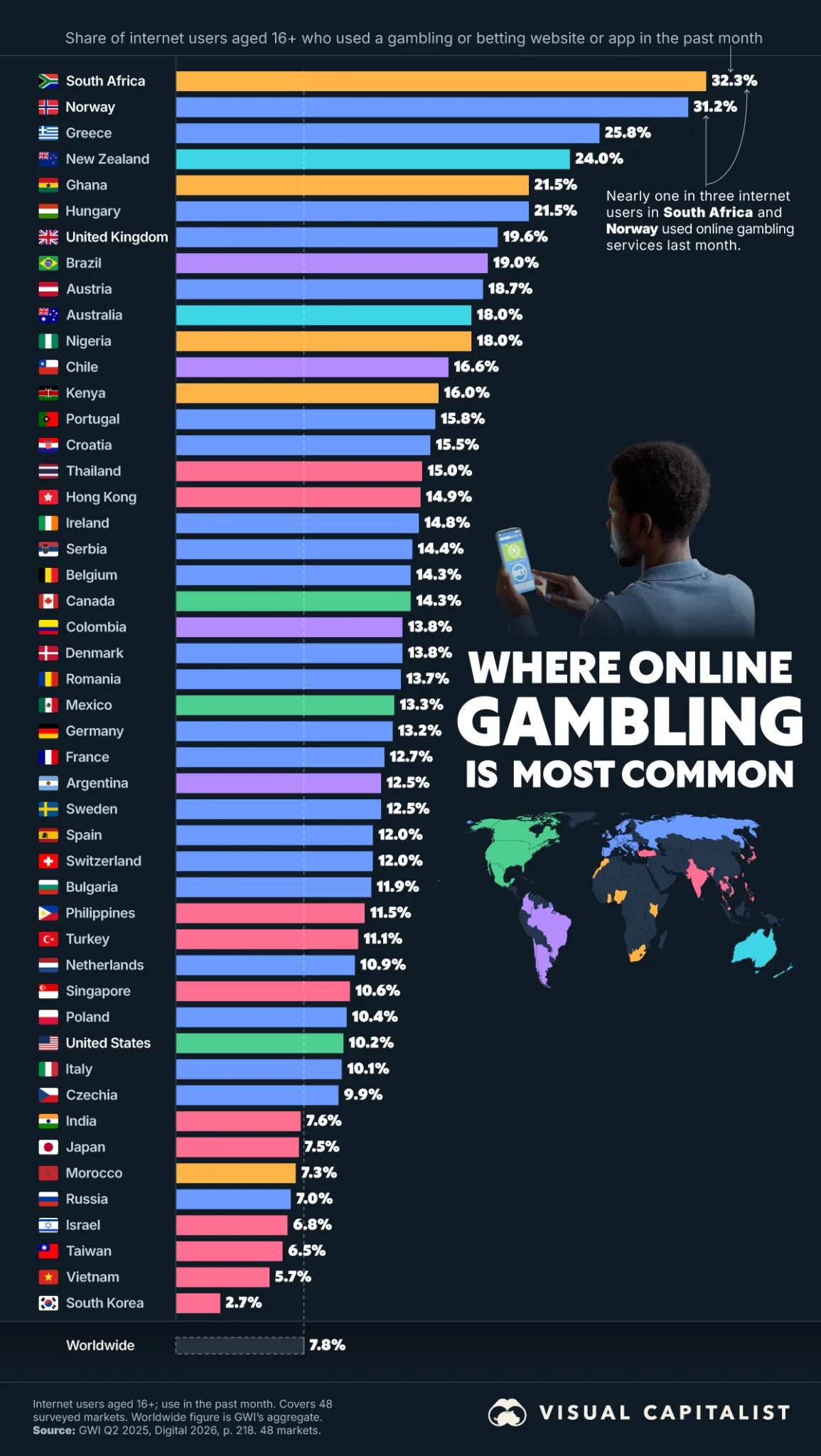
Som svensk undrar jag vad detta beror på… Är det privatekonomiska orsaker och därmed missnöje med vänsterpartierna? Isåfall, vad har FrP för lösningar? Har bara hört att de vill sänka skatter och strama åt offentlig sektor. Sen har vad jag hört Norge inte samma problematik med integration, fattigdom och gängkriminalitet som Sverige vilket gör att höger-populism borde kännas mindre attraktivt i Norge, eller?
For the record, I don’t own a pit bull, never have, and have no interest in owning one. I have no dog in this fight (pun intended 😂). I’m genuinely just curious.
I recently learned about Norway’s pit bull ban and wondered how it’s actually enforced. If someone walks a pit bull down the streets of Oslo, do people call the police? Do officers approach them? Or is it rarely an issue because people generally respect the ban?
For context, I live in NYC, where public drinking is illegal but rarely enforced unless someone is being belligerent or the police want to make a point.
I’m also curious how Norwegians generally feel about pit bulls and how they react when they see one. Do you ever see them at all?
Earlier this year I was talking to someone on another subreddit, they were telling me that Norway doesn’t have a serious stray dog population like the US does despite spaying and neutering not being standard there because Norwegian dog owners are apparently just more responsible. So I’ve been curious about that, and dog ownership in Norway in general.
Is it true that spaying and neutering aren’t standard for dogs in Norway? And that you avoid unwanted litters by just being vigilant?
How common is dog ownership? Do most people own a dog at some point in their lives?
Is dog ownership in Norway seen as like, a default? I feel like in the US, a lot of irresponsible dog ownership stems from people treating dogs as something they need to have regardless of their own circumstances. So I was thinking, if Norwegian dog owners are generally more responsible, maybe there’s a different mentality there.
What breeds are popular in Norway? If accidental litters are rare, does this mean that mixed breed dogs are uncommon? Are certain sizes of dog more popular?
I’ve seen that you have breed bans, for six breeds. What breeds are stigmatized and what breeds are associated with certain stereotypes?
Do people in Norway bring their dogs to lots of different places? Is it common to bring them in cities, stores, or nature areas? Are leash rules common and are they generally respected?
Are there differences in how urban and rural communities handle dogs?
Det er mange grunner til at jeg skriver dette, alt fra Frølich som slipper straff for å smugle våpen og vår kompis som står bak hundrevis av lemlestede barn fordi barna var brune.
Det virker kanskje ikke som at det er en sammenheng, men den kommer etter hvert.
Har du sett på nyhetene i det siste så har du sikkert fått med deg at det er opprør i mange europeiske land og nyhetene vil gjerne fortelle deg at dette er pga Russland.
At de i Albania gjør opprør mot Trump og Kutchner havner gjerne langt bak, det samme at den amerikanske presidenten og de amerikanske oligarkene med mest makt har "advart" oss om borgerkrig og "innvandring" og arabere i lang tid, forsvinner borti eteren, når høyre i Norge repeterer de samme talkingpointsa. Det er Russland som vil oss vondt (ikke usa, vi elsker kapitalisme). Husker du hvorfor protestene startet i Frankrike eller husker du bare de få videoene du har sett?
Problemet for oss i Norge skjer når alle er enige om et narrativ; Protestene i Frankrike er pga muslimer og innvandrere, det samme i Albania, det samme i Italia, for ikke å glemme de 240 000 som døde i protester i Iran, og sikkert ende flere i Yemen.
Dette er selvfølgelig brune folk som ikke ville dødd under Obama eller Biden (Ikke faktasjekk dette!). så alle sentrumskuker i Norge kan vite hvem de burde heie på.
Har vi politikere i Norge som blir påvirket av fremmede makter så er det samtlige partier, og kanskje enkelte er mer påvirkelige enn andre.
Hello! I'm about to move to Røros and I was looking at swimming facilities where I can keep training in winter. I'm a triathlete, I recently signed up for IM Portugal next year, so I would like to continue my training but I'm noticing that there aren't a lot of options to train in, regarding swimming pools.
Does anyone know about good swimming pool facilities in the area? Thanks!
today is my second and last night in Bergen and I just wanted to see if there would be somebody or a group of people willing to show me around and grab a drink in a good bar/club/pub in Bergen? I am 19yo from Austria and Bergen was the finish for my roadtrip - would love to spend the evening with someone/some of you! :D
Translated source: Tidsskrift for Herøy Sogelag, 1953, Bd. II, hefte 2
Written by Andreas Knutsen Rødvik (1894 - 1969): "Taken by Pirates."
Here is a story my grandfather told about his great-grandfather. It has been significantly abridged. All dates have been added by me (meaning Andreas in 1953).
My great-grandfather, Elias Larsson (1732 - 1813), was from Rotevatn in Volda. In his youth, he was a seafarer. On one occasion, the ship he sailed with was captured by pirates—the Barbary corsairs of North Africa. They seized the ship and its cargo, and took the crew as slaves. The men were put to hard labor; if they were unwilling to work or offered any resistance, they were flogged and subjected to brutal mistreatment. For the rest of his life, Elias bore terrible scars on his back from such treatment.
In his old age, his arthritis would often flare up in those old scars. At such times, he would remark: "The corsairs are at it again."
Elias and a friend managed to escape in a small boat. They hid in a crevice along the steep Algerian coast until the corsairs gave up the search; then, one dark night, they set off, hoping to reach Spain. The wind picked up, and the situation looked dire for the small craft. Their food supplies also ran out. Just in the nick of time, they were rescued by a merchant ship.
They were put ashore in southern Spain, but, lacking both food and money, they were mistaken for bandits by the local people. However, a mendicant friar—and a couple of monks' robes—helped them through their worst hardships. Eventually, they made their way to Copenhagen. Elias later returned home and, in 1765, married Kristi Jonsdotter Åsebø.
They took a lease on the farm Raudvik in Herøy and settled there. Elias and Kristi had three (five) children [...] He has a large number of descendants in Herøy.
----- Journal ends here -----
My grandfather—Elias' descendant—now 80 years old and struggling with severe Parkinson's disease dementia, showed me this old dusty journal on his shelf, and I read the same entry about Elias. Naturally I got obsessed about this story of our forefather from almost 300 years ago, and using the many tools my grandfather never had access to, I dug through every single source I could find; oral family stories, local journals and articles, international documents and declarations. I found an historical goldmine, mostly unknown even to the Norwegian public; not only about Elias and the thousands of other Norwegian slaves in Africa, but societal corruption and extortion by local power-hungry priests, and Danish gunpowder funding Algeria's very war against Europe itself... and Algeria's war of twenty thousand soldiers against the neighboring independent tribes of Kabylia.
It took me 1,5 years of work to complete my research. My grandfather's severe dementia, unfortunately, has made him incapable of reading big texts, understanding Elias' life anymore... or the story around him. The same story he himself inspired me to understand. Though my grandfather can no longer read the work I did, but I'd appreciate if someone did.
I have nothing to sell, but I would like to share what I have discovered. Norwegian historical drama is often dominated by the Viking Age, crime stories, and the World Wars; yet, there is very little about the generation that built the nation and secured a constitution they themselves would never live to see. So far, I have written about a third of Elias’s story—a biographical narrative spanning 264 pages. Do you have any advice on where, or with whom, I might be able to publish this? And is there anyone here who might be interested in reading it?
Volda in Sunnmøre, where Elias was born and raised; the surname Rotevatn originates from the inland lake seen on the right in the picture. The picture is taken from the peak of Rotsethornet.
I’m taking the SAK1001 oral test, and I’m unsure what to study for specifically, does anyone know what kind of things they’ll ask/things to be ready for?
Firstly, let me say that Norway is an amazingly beautiful country and I just recently spent some time there hiking and exploring. The people I've met seem to be very environmentally conscious when it comes to the climate.. but after some research on the fauna of the country, it seems the populous actually sustains disdain for their wildlife, as they want their forests but for THEIR enjoyment, not for anything to actually live in them.
In my opinion the environmental consciousness of the people of Norway is nearly fictitious.
Heres what I've found:
There are species of game birds that are considered threatened like the rock ptarmigan, and yet no attempt in recoverying the species or placing restrictions on hunting them.
Bears, wolves, wolverines, and lynx, continue to be heavily culled to satisfy sheep farmers. For example, there are fewer than 150 bears in the entirety of continental Norway live mostly near the border of Sweden. If a bear ventures too far into Norway it is shot by the authorities as a matter of human safety but the real reason seems to be irrational fear and economic drivers related to livestock husbandry.
Ungulate populations have increased, but mostly due to a decreased interest in hunting in spite of the policies actually promoting more hunting. The lack of predator species also contributes to this.
Here's my question for Norwegians. Do any of you seeing a reversal in your conflicting view of the environment? If so, give me some examples of hope. Again, this is no attempt to jab at the people of this country, but I believe the hypocrisy and contradictions need to be addressed.
This is kind of random, but I would love to go to Norway one day. I am also a proud and happy owner of two Norwegian Elkhounds. They're beautiful grey elkies. I've always been curious to know how common Elkhounds are in Norway. I know they're the national dog of Norway, but like, do you see them often across Norway since they are native to Norway and have been around for a long time? Picture of my two for tax.
This moment ended with a fight in a club situated in Kristiansand Center but at least I catched a nice moment with people having fun in a Friday night .