r/Thailand • • 10d ago

History 1980s era Get out of Jail Free card

Thumbnail
gallery
1.2k Upvotes

This card has stayed with me since the 80s. I was the kid of an embassy employee way back when. Fortunately I never had to present it! 55😂5 Thought this might be a good place to share.

r/Thailand • • 13d ago

History 10 years ago, King Bhumibol Adulyadej (Rama IX) passed away at the age of 88

Post image
643 Upvotes

r/Thailand • • 4d ago

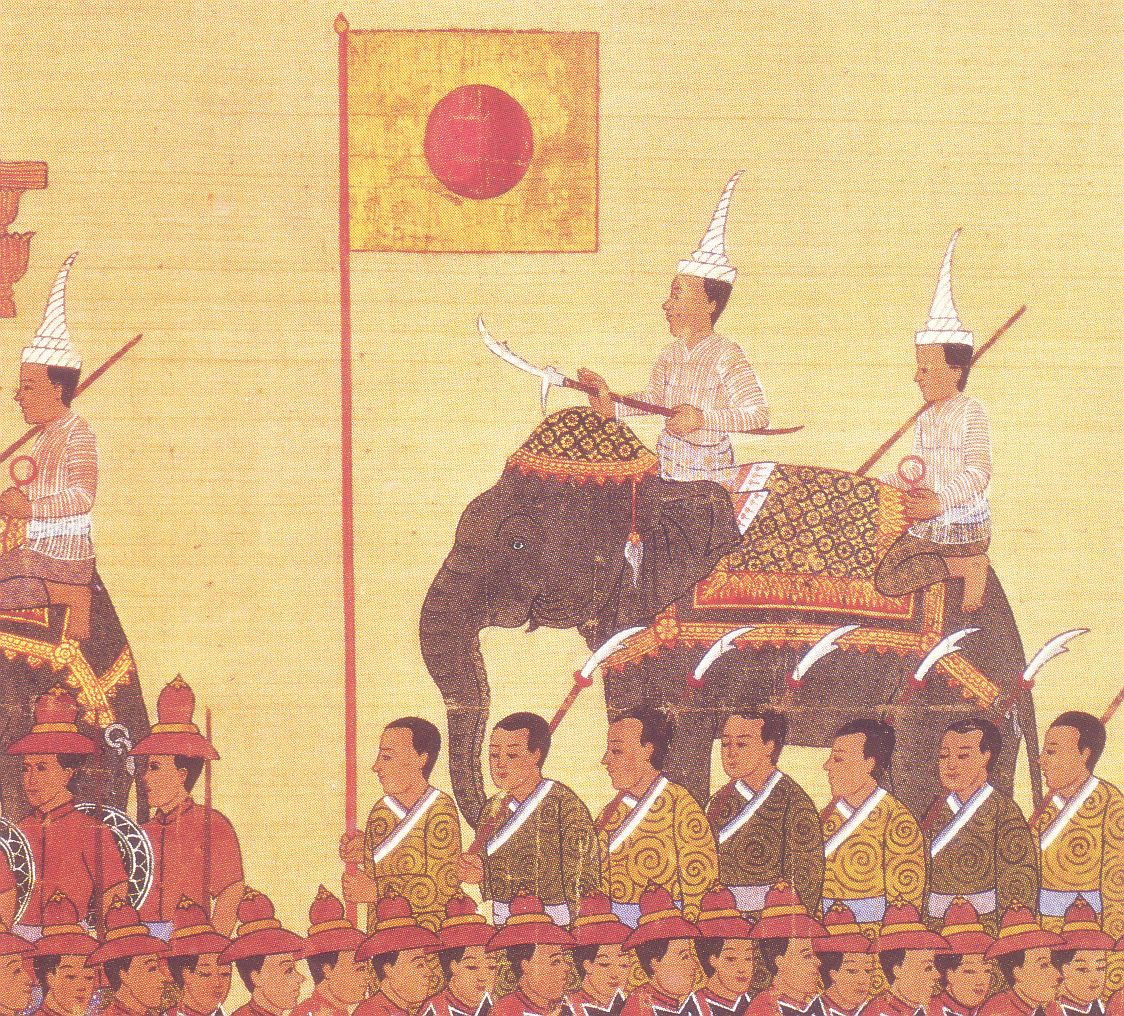
History Around 1612, 500 Japanese mercenaries stormed the palace of Ayutthaya to seize the king. Eight monks walked him out right past them. Nobody moved.

Post image
613 Upvotes

At that time a lot of Japanese ships came to trade in Ayutthaya. The Japanese were angry. They said the ministers had plotted with a monk to kill the previous king.

About 500 of them banded together and marched onto the Sanam Luang, the big field in front of the palace. The king was there, sitting in a throne hall listening to monks teaching.

They waited to grab him.

Right then, eight monks from a nearby temple walked in, picked up the king, and walked him out. Right in front of the Japanese.

Once he was gone, the Japanese started shouting at each other: "We were going to seize him, so why did we just stand still?"

While they argued, the palace guard got organized, attacked, and killed a lot of them. The rest ran to their ships and sailed off.

The chronicle says Japanese merchant ships never came back to trade in the capital after that.

The king gave the commander a top title. And he ordered the royal kitchens to cook for the monks of that temple, every day, forever.

From my published English translation of the Royal Chronicles of Ayutthaya (reign of King Songtham).

r/Thailand • • 10d ago

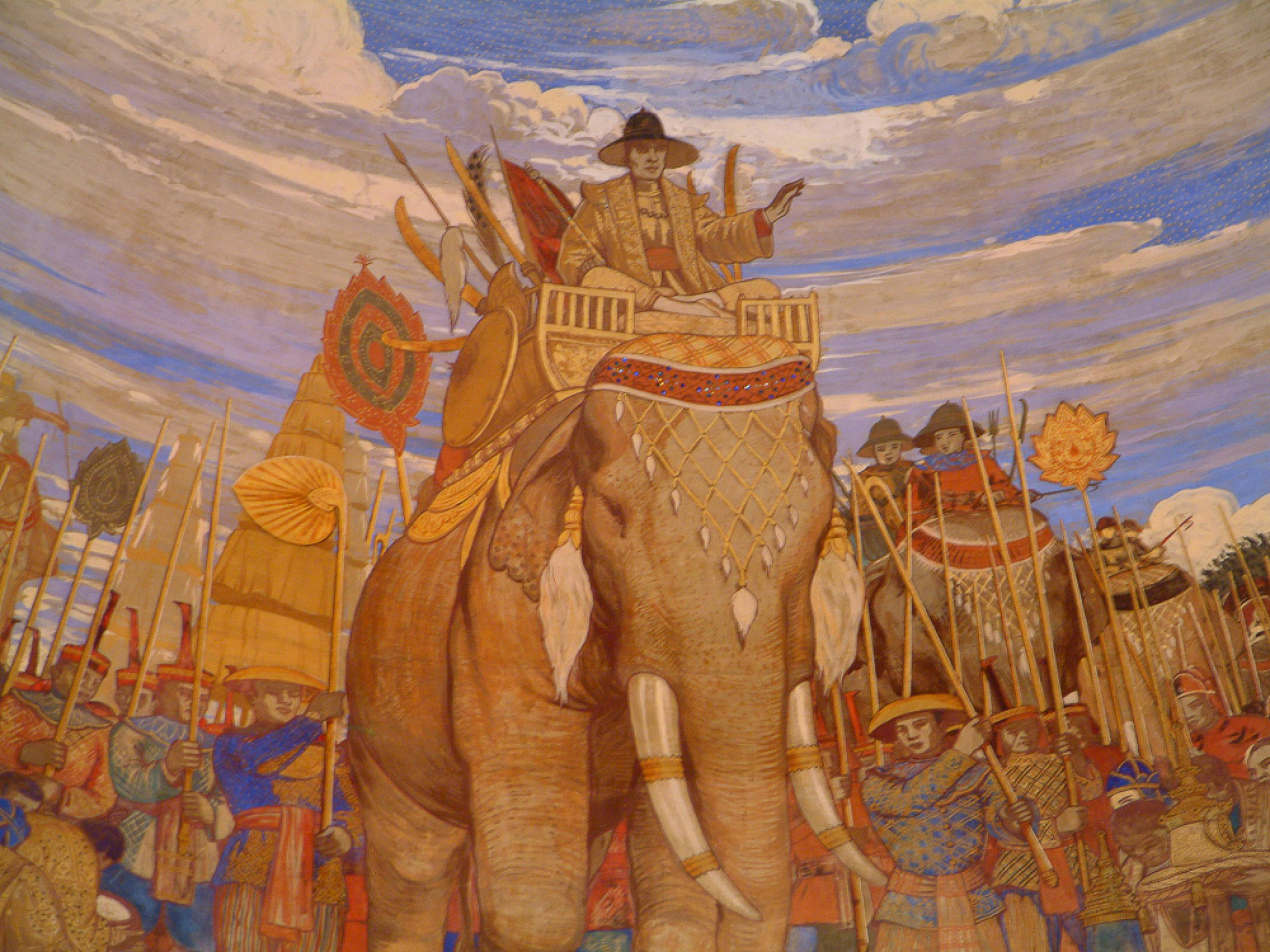
History Cut off from his army, King Naresuan challenged the Burmese Crown Prince to the last royal elephant duel (1593)

Post image
271 Upvotes
  1. The Burmese Crown Prince, Mingyi Swa, invades Siam with a huge army. King Naresuan and his younger brother ride out to meet him.

As the battle starts, their war elephants go into musth and charge ahead. Their generals fail to follow. The two brothers end up alone in the middle of the enemy, under gunfire, surrounded by smoke.

When the smoke clears, Naresuan sees the Crown Prince on his elephant, in the shade of a tree. He calls out:

"My Royal Elder Brother, why do you stand in the shade of the tree? Come out and engage in elephant combat to leave honor upon the land. In the future, there will be no kings who will get to engage in elephant combat anymore."

The Crown Prince accepts. He strikes first, and Naresuan blocks with his helmet. Then Naresuan strikes back, cutting him from the right shoulder to the chest. The Crown Prince slumps over his elephant's neck, dead.

Back at camp, Naresuan wants the generals who failed to follow him executed. A senior monk talks him out of it. They are pardoned on one condition: go and conquer Tenasserim and Tavoy.

January 18 is still celebrated as Royal Thai Armed Forces Day in honour of this duel.

From my published English translation of the Royal Chronicles of Ayutthaya.

r/Thailand • • Jan 30 '25

History Map of Siam (Thailand) 1893 AD.

Post image
667 Upvotes

Map of Siam (Thailand) 1893 AD.

During the reign of King Rama V, Thailand was called Siam and had more territory at the time. This map shows dependencies, monthons, and provinces. The map specifically highlights Siam in yellow. We can see that the whole Laos, Angkor & western Cambodian Provinces, Kedah, Perlis, Kelantan & Terengganu were part of Siam at this period. Notice that this is right before the RS112 incident where Siam had to cede the western bank of the Mekong River.

r/Thailand • • Mar 01 '26

History Shah of Iran’s 1968 State Visit to Thailand: A Royal Encounter Prior to the 1979 Revolution

Thumbnail
gallery
393 Upvotes

His Imperial Majesty Mohammad Reza Pahlavi, the Shah of Iran, and Her Imperial Majesty Empress Farah Diba Pahlavi paid an official state visit to Thailand prior to the Iranian Revolution. The Shah’s State Visit took place in February 1968.

Later, the four royals traveled together to northern Thailand, where King Bhumibol Adulyadej the Great and Queen Sirikit, the Queen Mother, hosted the Shah and Empress of Iran at a cultural performance featuring traditional Lanna dance - a graceful expression of northern Thai heritage and artistry.

https://www.facebook.com/share/p/1DUVjw1wTs/

https://www.facebook.com/share/p/188jrTWV8e/

r/Thailand • • May 30 '26

History what did owning a Mercedes like this mean in Thailand back then? 😊

Post image
180 Upvotes

r/Thailand • • Jan 03 '26

History Thai Actress Rumor Sparks Riot; Embassy Burned in Phnom Penh (2003)

Thumbnail
gallery
109 Upvotes

Origin of the Incident

The cause of the riot at that time stemmed from a rumor claiming that a Thai actress - āļāļš āļŠāļļāļ§āļ™āļąāļ™āļ—āđŒ - had given an interview saying she hated Cambodians because they had “stolen Angkor Wat from Thailand.” This rumor spread further when the Rasmei Angkor newspaper published the story on January 18, 2003, and it was later reprinted in the Koh Santepheap Daily on January 27, 2003. The original report from Rasmei Angkor continued to circulate more widely after that.

The situation escalated again when Cambodian Prime Minister Hun Sen mentioned the issue on January 27, 2003. The following day, January 28, the Cambodian government announced a ban on all Thai dramas. Meanwhile, the Thai actress denied the rumor, insisting that she had never made such a statement.

The Riot

Although the Thai actress denied the rumor, anger continued to spread and escalated. Thousands of Cambodians gathered in front of the Thai embassy in Phnom Penh, with the crowd swelling to nearly 1,000. Protesters burned Thai flags, destroyed embassy signs, and some were reported to carry weapons.

Ambassador Chatchawat Chatusuwan requested military support from Cambodia’s defense minister, but was told police could handle the situation. As tensions grew, Thai embassy staff were evacuated - some escaped by boat across the river, others through the neighboring Japanese embassy. Minutes later, the Thai embassy was stormed, set ablaze, and Thai-owned businesses were looted. Cambodian authorities failed to control the unrest, which was further fueled by false reports of Cambodians being killed in Bangkok.

Thailand responded by recalling its ambassador, downgrading relations, closing border checkpoints, suspending economic cooperation, and demanding Cambodia prosecute the rioters and pay damages.

Aftermath

Over 100 rioters were arrested, though most received light sentences. Editors of newspapers involved in spreading the rumor were not prosecuted. Cambodia later paid $6 million in compensation for damages to the Thai embassy, after which Thailand eased its measures and reopened the border.

Observers suggested the riots were linked to Cambodian domestic politics, with nationalist sentiment deliberately stirred through rumors, protests, leaflets, and false reports, causing the situation to spiral far beyond expectations.

āļĒāđ‰āļ­āļ™āļĢāļ­āļĒ āđ€āļŦāļ•āļļāļˆāļĨāļēāļˆāļĨ - āđ€āļœāļēāļŠāļ–āļēāļ™āļ—āļđāļ•āđ„āļ—āļĒāđƒāļ™āļāļąāļĄāļžāļđāļŠāļē āļ„āļĢāļš 20 āļ›āļĩ

Mob storms Thai embassy in row over actress comments - YouTube

WRAP Aftermath of rioting, destruction of Thai embassy, businesses - YouTube

r/Thailand • • Jul 06 '23

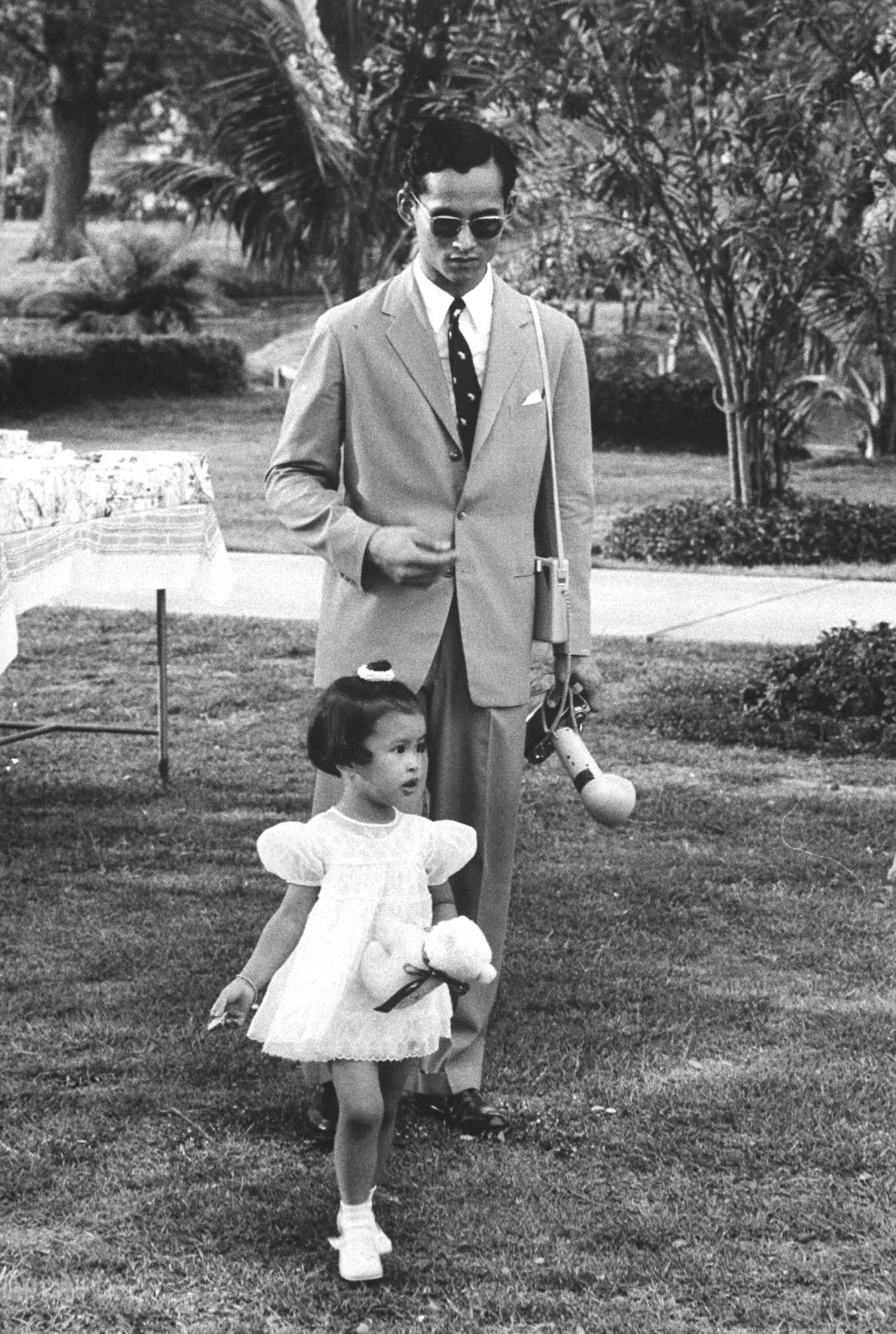
History King Bhumibol Adulyadej (Rama IX) of Thailand, at his daughter's birthday party. Bangkok, 1960 [1357x2020]

Post image
705 Upvotes

r/Thailand • • Sep 21 '26

History The French Bishop Who Brought Photography to Siam

Thumbnail
gallery
312 Upvotes

The person who first introduced photography to the people of Siam was Bishop Jean-Baptiste Pallegoix, commonly known as “Bishop Pallegoix.”

Pallegoix was a French Catholic missionary who lived in Siam from 1830 to 1862 during the reign of King Rama III and through the mid-reign of King Rama IV. He made countless contributions to Siam, including spreading Christianity, promoting education, documenting information about Siam, and introducing Western knowledge and technology to the country.

The daguerreotype camera was introduced to Siam through Pallegoix, who contacted Father Albrand, a priest based in Paris, France, to help him order a camera. The camera was then sent to Bangkok with Father Larnaudie, who was traveling there.

After receiving the camera, Pallegoix spent approximately three or four days experimenting with it before figuring out how to use it. In a translated letter dated October 20, 1845, he wrote:

“I have experimented with taking photographs using the Daguerre camera together with Father Larnaudie. After three or four days of practice, I was able to take photographs. However, much of the photographic solution Father Larnaudie brought with him evaporated during the journey, so very little remains. I have also used up almost all the silver plates that were sent to me.”

After Pallegoix introduced this fascinating new technology to the royal court, some members of the royal family and the nobility became highly intrigued by photography.

However, many members of the upper class were initially afraid of having their pictures taken. Some believed that photographs could be used by people skilled in black magic to harm the individuals depicted. Others feared that having their picture taken could trap their soul inside the image, thereby shortening their lifespan.

When the reign of King Rama IV began, however, the king played a major role in completely changing these negative attitudes and beliefs about photography among the Siamese elite.

At the time, Siam was embracing Western culture on a large scale. For example, portraits of King Rama IV were sent with Siamese diplomatic missions traveling abroad to establish friendly relations with foreign countries, following the traditions of European royal families. This helped increase the popularity of photography within the Siamese royal court.

During this period, Siam also saw the emergence of a renowned royal photographer, Francis Chit, also known as Luang Akkhani Narumit. He was one of the first Siamese people to take an interest in photography and went on to open the first photography studio in Siam.

Between 1840 and 1865, several other Western photographers came to Siam to take photographs, including:

  1. Father Louis Larnaudie: A French priest who played a role in bringing daguerreotype photographic equipment to Siam in 1845.
  2. Pierre Rossier: A Swiss photographer who traveled to Bangkok in 1861.
  • Evidence suggests that he helped introduce photography techniques to early Siamese photographers, including Francis Chit.
  1. Johann August Sachtler: A German photographer who arrived in Bangkok in 1865.

  2. John Thomson

  • A Scottish photographer who arrived in Bangkok in September 1865.
  • He was one of the foreign photographers who produced an extensive photographic record of Siam during this period.

āļŠāļēāļ§āļŠāļĒāļēāļĄāļĢāļđāđ‰āļˆāļąāļāļāļēāļĢāļ–āđˆāļēāļĒāļĢāļđāļ›āļ„āļĢāļąāđ‰āļ‡āđāļĢāļāļ•āļ­āļ™āđ„āļŦāļ™ āđāļĨāļ°āđƒāļ„āļĢāđ€āļ›āđ‡āļ™āļ„āļ™āļĢāļīāđ€āļĢāļīāđˆāļĄ ?

āļŠāļģāļ™āļąāļāļŦāļ­āļŠāļĄāļļāļ”āđ€āđ€āļŦāđˆāļ‡āļŠāļēāļ•āļī

āļ›āļĢāļ°āļ§āļąāļ•āļīāļāļēāļĢāļ–āđˆāļēāļĒāļ āļēāļž: āļžāļĪāļĻāļˆāļīāļāļēāļĒāļ™ 2013

'Siam: Through the Lens of John Thomson (1865-66)'

r/Thailand • • Sep 02 '24

History Topography map of Thailand

Post image
933 Upvotes

r/Thailand • • 13d ago

History 53 years ago, on 14 October 1973, thousands of students gathered at Thammasat University and Ratchadamnoen Avenue to end the Thanom military regime

Thumbnail
gallery
224 Upvotes

From the Manushya Foundation:

In 1973, Thanom Kittikachorn's military government was facing several scandals, including corruption, and was heavily criticised for their lack of transparency. The criticisms resulted in a growing pro-democracy and anti-government sentiment, which transformed into a movement led by university students, organised under the National Student Center of Thailand (NSCT).

The government's final provocation to the protestors occurred on April 1973 with the Thung Yai hunting scandal, which highlighted the corruption among high-ranking government officers and enraged the nation.

Mass protest begun and the crowd reached its peak on 13 October at over 400,000 people. On 14 October 1973, while being ordered to disperse, violence broke out. The government brought in tanks, helicopters, and other military-grade weapons to support the police, resulting in 77 deaths and 857 injuries.

The next day, on 15 October 1973, the situation began to quiet down when it was announced that Prime Minister Thanom had resigned and fled the country along with Praphas Charusathien, Minister of Interior, and his son, Colonel Narong Kittikachorn.

Timeline of events on 6–15 October 1973 from Wikipedia:

On 6 October, Thirayuth Boonmee and ten other political activists were arrested for distributing leaflets in crowded places in Bangkok such as Bang Lamphu, Siam Square, and Pratunam, urging support for an early drafting of the constitution.  The ruling government used a decree banning gatherings of more than five people to arrest them. The other arrestees were Thirayuth, Prapansak Kamolpetch, Boonsong Chalethorn, Bandhit Hengnilrat, Visa Kanthap, Thanya Chunkathatharn, Thawee Muenthikorn, Montri Juengsirinarak, Nopporn Suwanpanich, Preedi Boonsue, and Chaiwat Suravichai. They were taken to police headquarters and their homes were searched.

On 7 October, Kongkiat Kongka, accused of being a member of a group advocating early promulgation of the permanent constitution, was also arrested.

On 8 October, the twelve arrestees were denied bail and were also accused by Deputy Prime Minister Praphas Charusathien of being linked to a plot to overthrow the government.

On 9 October, more than 2,000 students from Thammasat University demonstrated at an anti-government rally. After the rally, the students held an all-night vigil, at which they were joined by students from Chulalongkorn University and several teacher training colleges. Khaisaeng Suksai, a former member of parliament, was also arrested, bringing the total number of those in custody to thirteen.

On 10 October, rallies in Bangkok swelled as more students from other student organizations joined the protests. The government prepared to react by quietly setting up a crisis control center with Praphas Charusathien as its director.

On 11 October, Praphas agreed to meet with the students, who demanded the release of the 13 prisoners. He refused to meet their demands. By this time, the rally had moved to the grounds of Thammasat University to accommodate its growing size, with the number of protesters now reaching 50,000.

On 12 October, the government announced that it would release the thirteen prisoners on bail, but the students rejected the offer, stating that they would only accept the unconditional release of the prisoners. Money was contributed by members of the public to support the protest.

On 13 October, the crowd, which had swelled to more than 400,000 (including many members of the public), marched to Democracy Monument to demand the release of the prisoners. The government quickly agreed to the demands and promised that the permanent constitution would be in place by October 1974. With their demands met, the students agreed to go back to their universities. About 200,000 students refused to disband, however, and their leader, Seksan Prasertkul, decided to lead them to the palace to seek advice from King Bhumibol (Rama IX).

On 14 October, the students reached the palace and were met by the king's representative, who said that King Bhumibol (Rama IX) requested that the students disband. The students agreed to do so, and the assistant director of the police ordered barricades placed to disperse the students in an orderly, single direction. The large size of the crowd meant that many were not able to leave, but the police refused their request for another exit, which resulted in resentment among the students. It is not clear how it happened, but reports soon were heard about violence against the students as the crowd became restive. Early in the morning, bombs exploded near the royal palace and the police began attacking the students.

By late morning, there were acts of vandalism and violence by both sides as the situation spun out of control. The government brought in tanks, helicopters, and infantrymen to support the police. Seventy-seven deaths and 857 injuries resulted and many buildings near Ratchadamnoen Avenue were set on fire. The number of demonstrators quickly grew to more than 500,000, as other students and their sympathizers rallied to their defense. The soldiers finally withdrew in the evening, and about 19:15 the king announced on television and radio that Thanom's military government had resigned.

Violence continued on 15 October around the police headquarters, with students demanding that Thanom be removed as head of the armed forces. Only when it was announced that Thanom, Praphas, and Thanom's son, Colonel Narong Kittikachorn, who was married to Praphas' daughter, had fled the country did calm return to Bangkok. The end had come as quickly and unexpectedly as the violence had begun.

The 14 October 1973 Memorial was erected at Ratchadamnoen Avenue where the protest took place and unveiled on 14 October 1998, which is regarded as the first memorial in Thailand to commemorate those who fought for democracy.

The plaque in the last picture at the Memorial reads as follows:

āļ‚āļ­āļĢāđ‰āļ­āļ‡āđ€āļ–āļīāļ”āđ€āļžāļ·āđˆāļ­āļ™āļĢāļąāļ āļ–āđ‰āļēāđāļŦāļĨāļĄāļŦāļĨāļąāļāļˆāļ‡āđ€āļĨāđ‡āļ‡āđāļĨ
āļ­āļĒāđˆāļēāđ€āļŦāđ‡āļ™āđāļ„āđˆāļĢāđˆāļēāļ‡āđāļŦ āđāļŦāđˆāļ‡āļ–āđ‰āļ­āļĒāļ„āļģāđāļĨāđ‰āļ§āļˆāļģāļĒāļ­āļĄ
āđ€āļ›āđ‡āļ™āļ„āļ™āļ•āđ‰āļ­āļ‡āļ„āđ‰āļ™āļ„āļīāļ” āđ€āļĄāļ·āđˆāļ­āđ€āļ›āđ‡āļ™āļĄāļīāļ•āļĢāļ­āļĒāđˆāļēāđ€āļĄāļēāļĄāļ­āļĄ
āđ„āļĄāđ‰āļ”āļ­āļāļ—āļĩāđˆāđ€āļ”āđ‡āļ”āļ”āļ­āļĄ āđƒāļŠāđˆāļ”āļĄāđ„āļ”āđ‰āļ—āļļāļāļ”āļ­āļāļ”āļ§āļ‡
āļ‹āļķāđˆāļ‡āļ„āļ™āđ€āļ•āđ‡āļĄāļ„āļļāļ“āļ„āđˆāļē āđ€āļžāļĢāļēāļ°āļŦāļēāļāļāļĨāđ‰āļēāđ€āļ‚āđ‰āļēāļāđˆāļēāļ›āļ§āļ‡
āļ„āļ§āļēāļĄāđ€āļĨāļ§āļ—āļ°āļĨāļ§āļ‡āļĨāđˆāļ§āļ‡ āļĄāļīāļ­āļēāļĨāļąāļĒāļŠāļīāđˆāļ‡āđƒāļ”āđ€āļĨāļĒ

I beg you, dear friend, if there is a core principle, fix your sights upon it.
Do not see merely a web of hollow words and blindly submit.
To be human is to think and question; as true friends, let us not intoxicate one another with illusions.
Not every plucked flower that offers fragrance is meant to be inhaled.
For a person gains their full human worth by courageously breaking through all hardship,
Piercing right through evil and darkness, holding nothing back, without regret.

r/Thailand • • 20d ago

History How Taksin Escaped Ayutthaya and Rebuilt Siam

Post image
116 Upvotes

January 1767. Ayutthaya has been under Burmese siege for over a year. One night, a governor named Phraya Tak breaks through the lines with about a thousand men and escapes.

Months later, outside Chanthaburi, he orders his soldiers to eat their last meal and smash every cooking pot: "Tonight we will take Chanthaburi and eat our breakfast inside the town. If we fail, let us all die together."

Within a few years, King Taksin the Great reunited Siam and founded Thonburi. He reigned for fifteen years and fought off the Burmese attacks that followed.

From my published English translation of the Royal Chronicle of Thonburi, the official court history written within living memory of the events.

r/Thailand • • Oct 05 '23

History Bring back the old (1832-1916) Thai flag please...

Post image
403 Upvotes

r/Thailand • • Jun 16 '26

History Why are Thai people racist towards Laos and Hmong people?

0 Upvotes

My mom told me many people who are no that starved to death and was treated poorly. What is reason of being racist to them?

r/Thailand • • Sep 11 '26

History Did the Thai called their country Siam in their own language before 1930 ?

34 Upvotes

Thai people call Thailand "mueng Thai" or "Platet Thai" in their language, but did they used to call the country "Siam" in their language before 1930 ?

r/Thailand • • Sep 24 '26

History Just found this in an old shoe box in our basement from May 20, 1971

Post image
120 Upvotes

* Edit it’s Nov 19, 1971

This item is for sale

DM with offer

r/Thailand • • Apr 26 '25

History Why I attended Anzac Day's dawn service alone as a Thai

Thumbnail
gallery
338 Upvotes

What made me, a solo Thai traveller, attend the Anzac Day ceremony in a Thai jungle among hundreds of Westerners?

I look totally Asian, so most people won’t guess that I am 6.25% British. My maternal great-grandpa is half British.

During World War 2, Western citizens from the Allied nations were arrested by the Japanese. They were imprisoned and forced to build a railway to Myanmar. Around 100,000 people lost their lives in the process, among them were at least 2,815 Australians. Since my great-grandpa held Thai citizenship, it never occurred to us that he could have been arrested or enslaved by the Japanese. 

A few months ago, I visited a World War 2 museum in his hometown and found that the Japanese also forced local Thais to perform labour work under harsh conditions. With him looking more British than Thai, I suspect that he was also on the list. If that was the case, then he could have been a prisoner of war, fled to Southern China, or fled to a very remote place in the forest. He was around 25-35 during the war and grew up in a forest in Chiang Mai. One of the family’s dad lore was that he once fought a tiger with his bare hands.

Regardless of what happened, I began to read more about how the Japanese forced prisoners of war to build the Burma Railway. To my surprise, I found that the Australian Embassy in Thailand holds Anzac Day’s dawn service every year at the Hellfire Pass, a major construction site of the Burma Railway. Last Thursday, I travelled over 200 km to Kanchanaburi. A day later, I woke up at 3:20 AM to attend the dawn service. It was less about the family heritage but more about my personal curiosity toward the ceremony.

As a Thai, I don’t even know when our Veterans Day is. To see hundreds of Australians, New Zealanders, and Westerners from all over the place travelling to remote Kanchanaburi and waking up so early to attend the dawn service while the sun slowly rises in the jungle was truly a magical and inspiring experience. I talked to an Australian man who sat next to me, and he explained that it is important to remember the cruelty of war and the value of peace. As a non-Australian, I admire how this day is commemorated on such a vast scale in Australian communities across the world.

r/Thailand • • May 02 '26

History Portuguese help expel the French from Siam

Post image
124 Upvotes

Regarding 17th-century Siam, it is important to read the Journal de l'AbbÃĐ de Choisy, the MÃĐmoires du comte de Forbin, and Desfarges' Relation de la RÃĐvolution arrivÃĐe à Siam dans l'annÃĐe 1688.

France arrived in present-day Thailand with promises of help against the Dutch and British, sowed copious intrigue against the Portuguese, settled in, and, in the end, tried to force the then Thai sovereign (King Narai) to convert. It was a true international intrigue.

In Versailles, the priests of the Missions ÉtrangÃĻres, protected by the King's mistress (or rather, his secret wife, Madame de Maintenon), wanted to convince Louis XIV that Siam was ripe for accepting missionary work and conversion to Rome. They went to the Pope, lied to him, and promised a new Japan, that is, an absolute success of conversions.

Then, with the help of a Greek adventurer (Constantine Phaulkon) who had risen so high in Siam that he had become a favorite of the king of Ayutthaya (1), they filled the Siamese monarch's head with expansionist projects, built him a palace of stone and running water, erected an astronomical observatory for him, and convinced him that great days were to come.

Phaulkon, who had worked as a sailor in the fleet of the Honorable East India Company and who had later been in Java working on his own account in "import-export" businesses that bordered on piracy, was married to a Portuguese-Japanese woman. He spoke and wrote our language well, as was required of any businessman, since Portuguese was and would remain until the mid-19th century as the lingua franca in the international relations of the Far East and Southeast Asia.

He lied to the English, cheated the Persians - who had important commercial interests in Siam - and tried to lie to the Portuguese. The Portuguese of that time were not exactly naive in these affairs, so they did everything to prevent the French adventure, which was detrimental to Portuguese interests and equally dangerous for the Luso-Siamese Catholic minority in Ayutthaya.

Goa sent Pero Vaz de Siqueira (1684-1686) as ambassador to Siam, who tried to dissuade the Thais from the dangers of French interference. In vain, as the Greek resorted to all means to prevent the Siamese King from listening to our ambassador.

Subsequently, Phaulkon prepared a new scheme, suggesting to King Narai that he send an embassy to France to make the Sun King believe that new subjects had been formed in the distant East. The embassy, ​​aboard the Soleil D'Orient - with elephants, exotic animals, much gold and silver - was wrecked in the Storms. A new embassy was prepared, this time with a successful arrival in Europe.

Now, in Versailles, the Siamese ambassador Kosa Pan was confronted with the imposition of French "military aid" to Siam; in other words, as if today some government asked France for help and France sent it, not advisors and resources, but an army. Then they arrived at the other end of the world six months later. They set foot on land and occupied Bangkok, then a small village entirely composed of Luso-Thai Christians. Soon, a national anti-French uprising led to a palace coup, the Grand King Narai "was struck down suddenly" and his Greek favorite was torn to pieces. Hunted like hares, the French fled and a huge web of misunderstandings ended in tragedy. France was, decidedly, a virgin in everything concerning the East. Such regions would not be seen again until the mid-19th century!

In the Siamese Revolution of 1688, the large Luso-Thai Catholic community did not side with the European invaders, but actively participated in the fight against the French, so that it was not only spared, but praised for the bravery and loyalty it had shown. But it was not only the Catholic community that took up arms in defense of Siam. Ships equipped with artillery arrived from Macau and blockaded the mouth of the Chao Phraya River, preventing the French expeditionary force from receiving reinforcements. In gratitude, the new king, Phetracha, would send an ambassador to Goa two years later to thank the invaluable Portuguese help in the fight for Siamese independence.

Michael Castelo-Branco

(1) Ayutthaya, the former capital of Siam, located about 80 kilometers from Bangkok.

r/Thailand • • Aug 30 '26

History Why Thailand _had_ a beer duopoly

28 Upvotes

I posted it as a comment reply in https://www.reddit.com/r/Thailand/comments/1w1m4mf/why_is_craft_beer_so_expensive/, but it didn't seem to pass the spam filter - probably because I linked to the original Geocities source, and that site has some spammy ads and auto-redirects. Or maybe it was too long for a comment.

This. I spoke to a local brewer here who said that the big companies like Singha lobby for these types of restrictions

After seeing this comment in said thread, I remembered this article. Boon Rawd (Singha, Leo) benefited from the duopoly, but I think ThaiBev is easily the worst offender. And to be clear, the "10 million baht capital, etc." requirements were abolished in 2022.

This article was written by Chris Baker & Pasuk Phongpaichit, who you may know as the authors of A History of Thailand. This was written as part of their monthly column for The Nation using their pen name, Chang Noi, in a different age when Thailand had a decent level of press freedom. Mr Progress is the founder of ThaiBev (Chang), Charoen Sirivadhanabhakdi. Charoen can mean "progress" in Thai.

If you like short, info-packed articles like this, you can pick up Chris & Pasuk's book https://silkwormbooks.com/products/jungle-book

----

Drinking with Mr Progress

23 July 2001

Travelling into Thailand’s remoter regions has one special reward. You drive a long way down a dirt road. Better still, you walk for hours away from towns, roads, and telephone wires. At nightfall, your village hosts produce a flagon of lao khao, sattho, or khachae—rice liquor. They ask you to sample. They want to know if you like it. It’s their handiwork. It comes from a traditional local recipe.

Your hosts take you to see the production. The technique is simple. But they are proud of the expertise. The same equipment was described by seventeenth century visitors to Ayutthaya. You can see it in use outside Luang Prabang in Laos, in Sipsongpanna in China, and elsewhere.

You have no problem in giving your hosts the praise they want. Chang Noi has sampled brews in Chiang Rai, Mae Hong Son, and Sakhon Nakhon which are outstanding. Smooth. Herbally fragrant. More of a wine strength than a spirit. Full of good feeling.

But with one tiny drawback: totally illegal.

If you want a legal, affordable tipple, you have a limited choice among products made from the waste products of sugar mills. They are little different from industrial alcohol. Recently Thailand has also been importing cheap whisky considered virtually undrinkable in its country of origin. A lot of rural Thai men die prematurely in their 40s because their stomachs fall apart. Some believe there might be a connection.

Remote places have always defied the liquor laws. But over recent decades, places have become much less remote. Subterfuge has become more difficult. Villagers in Phrae fought gun battles with excise officials to protect their local liquor industry. This defiance has now become more widespread.. Villagers besiege police stations to rescue arrested distillers. In May, ten thousand attended a 2-day festival of local liquor in Chiang Rai. The producers formed an association and handed out membership cards. Last month, they held a “seminar” in prestigious Chulalongkorn University at the heart of Bangkok.

While the liquor laws make a lot of people frustrated, they make one man staggeringly rich: Mr Progress.

For two hundred years, the government has raised revenue from liquor through tax farms and licensed monopolies. Making profits under such arrangements has nothing to do with the normal laws of business competition. You make more profit by fooling the customer and fooling the tax-gatherer.

Mr Progress first got into the business by marrying the daughter of the firm which made the bottle caps. In his first venture, he and a partner secured a monopoly for a small and unattractive area, hired the Mekong blender to make a copycat product, and quietly leaked their product across the borders of their concession area into more attractive markets outside. Then in 1983 they bid an outrageously high amount to secure the Mekong concession. Two years later, in their most brilliant manoeuvre, they went bankrupt.

The banks could not afford to see a billion baht loan go bad. The government could not sacrifice 8 per cent of its revenue. So the banks and government put together a monopoly cartel in order to save themselves. Mr Progress never looked back. He streamlined production to eliminate costs. He separated the production and distribution companies to minimise the tax. He organised the cartel with a hundred-plus cross-owning companies tangled enough to bamboozle any auditor. He folded into the cartel anyone who threatened to compete. By the mid-1990s, gross revenues were estimated at fifty billion baht a year, and Mr Progress’ share in the cartel was an estimated 55 per cent.

The profits are huge. Mr Progress reinvests them heavily, not in improving the product, but improving his protection. General Prem, who was prime minister when he secured the first concessions, became a chairman of one of his companies. General Chatichai and members of his 1988-91 Cabinet, which renewed the cartel’s concession without competitive bidding, were found to have received 900 million baht in gift cheques from Progress companies. General Suchinda came to the premiership vowing to dislodge Mr Progress, but reputedly fell under his charms. General Chavalit is a long-time associate. According to rumour, Mr Progress’ annual “public relations” budget is 2 billion baht. That would go a long way, even among generals. It would go even farther among government officials who make and administer the liquor rules.

In the late 1990s, government announced it would liberalise the liquor market. Mr Progress did not let such a profitable monopoly go without a fight. He tried to buy all the glass factories so competitors could not get bottles. He bought the land round some distilleries so competitors could not get into them. He stockpiled so much tax-paid liquor that he could flood any competitor out of the market. In 1998, the Cabinet liberalised the market, but the Excise department made rules insisting any producer needed 10 million baht capital, 200 rai of land, and a capacity of 30,000 litres/day.

Mr Progress gives lots to charity. He has been granted an elegant surname. His wife is a Khun Ying. Both like to be addressed as “Dr”, courtesy of Chiang Mai University. He is blessed by the elite. He lost a bank and a few other trinkets in the crisis, but has still been described as “richer than god”. Chang Noi once heard him give a very pretty speech as prologue to a business negotiation. He said his guiding principle was never to enter any business venture unless it was for the good of the nation.

An excise official in Chiang Rai recently said villagers could not be allowed to produce their excellent local liquor because “it wouldn’t be fair to large distillers.” Let’s turn that round. Overthrow the excise rules which allow Mr Progress to make unfair profits at the expense of village distillers. Chang Noi would drink to that. Preferably in lao khao.

r/Thailand • • 13d ago

History How the Chakri dynasty began: the last days of King Taksin (1782)

Post image
93 Upvotes

By 1781, King Taksin had ruled Siam for nearly fifteen years. His best general, Chao Phraya Chakri (by then titled Maha Kasat Suek), was away at war in Cambodia.

Back in Thonburi, the King was changing. He sat for long hours in meditation and demanded that monks bow down to him. He encouraged false accusers and believed every word they said. The accused were beaten until they confessed, then forced to pay huge fines.

"Faces were darkened with tears. The only bright and cheerful faces were those of the wicked men who were the accusers."

In March 1782, a revolt broke out. Phraya San, sent by the King to crush it, joined the rebels instead, and they surrounded the palace before dawn. Taksin admitted his faults and asked to become a monk, and he was ordained at Wat Chaeng, today's Wat Arun.

In April, Chakri returned from Cambodia and met with the ministers and elders. They called the old king "a great thorn and stump in the land that could not be left in place," and he was put to death. Monks, officials and people then begged Chakri to take the throne.

He became the first king of the Chakri dynasty, known today as Rama I. That same year, he moved the capital across the river and founded Bangkok.

Side note: the "Rama" numbering only appeared in the 1910s. King Vajiravudh, who had studied in England, wanted a simple system for foreigners, like European kings. Since "Rama" was already a traditional part of Thai royal names, he styled himself Rama VI and numbered the dynasty from the start.

r/Thailand • • Sep 17 '23

History Traffic jam in Bangkok of 1950

Post image
514 Upvotes

r/Thailand • • Mar 28 '25

History The last time an earthquake this big hit Myanmar and was felt in Bangkok was in 1930 (Bago Earthquake), almost 95 years ago.

Post image
573 Upvotes

It was recorded as the biggest earthquake ever recorded in Thai history at the time. These types of earthquakes are extremely rare, once in a century events. But as urban populations get denser its about time we start thinking about earthquake protection, especially as Bangkok is built soft ground. We are lucky to not suffer more damage.

r/Thailand • • Jun 22 '25

History What are Thai influences on Khmer culture?

20 Upvotes

Being neighbors, it’s not surprising that nations would borrow culture from each other. Thailand has borrowed aspects of Khmer culture before.

So what are some Thai influences on Khmer culture you know of?

r/Thailand • • Dec 29 '25

History A Decade of the Thai - Vietnamese - Cambodian War

Thumbnail
gallery
75 Upvotes

From 1980 to 1985, Vietnamese forces repeatedly attacked Cambodian refugee camps near the Thai border. More than a hundred thousand Cambodians fled into Thailand, often pursued by Vietnamese troops who clashed with Thai soldiers. Sometimes the Vietnamese shelled Thai territory with artillery, other times they sent in tanks. Casualties and injuries were constant.

At the start of the new year in January 1981, Vietnamese troops together with Heng Samrin’s Cambodian forces advanced into Thai territory at Sadaeng village, Ta Phraya District, Prachinburi Province. Thai soldiers fought back, leading to a prolonged firefight. Ten Thai soldiers and civilians were killed.

Between March and April 1984, the Vietnamese army invaded Thailand again to wipe out Khmer Rouge forces. Fierce battles with Thai troops left dozens of soldiers dead on both sides. A Thai aircraft was shot down, and many Cambodian and Thai civilians were wounded or killed.

In early 1985, Vietnamese forces crossed into Thai territory multiple times - at Ta Phraya in Prachinburi, Kantharalak in Sisaket, Ban Kruat in Buriram, and Sangkhah and Buachet in Surin, as well as Nong Chan village. Thai troops resisted with full force, but the Vietnamese pressed on relentlessly. Heavy losses were suffered by both soldiers and civilians.

On February 20, 1985, Vietnamese artillery struck Ban Kruat District in Buriram, killing three Thai soldiers and injuring many more. Vietnamese forces also clashed with Thai troops at sea, with Vietnamese warships firing on Thai fishing boats near Vietnam, killing several fishermen.

Throughout 1985, Vietnam continued its assaults. Both sides alternated between offense and defense, with mounting casualties. Vietnamese troops attacked Khmer camps along the border and fought Thai forces using machine guns, mortars, anti-tank weapons, and air support.

Thai military leaders concluded that the constant shelling across the border was no longer accidental spillover from fighting in Cambodia.

“Vietnam wants to provoke us and test us. They believe that if they press hard enough, Thailand might collapse like South Vietnam did in 1975, when North Vietnam advanced unexpectedly and seized the country.”

“We are in the open, they are in the shadows. They excel at guerrilla warfare, honed during the Vietnam War, and they deploy their sapper units.”

The Vietnamese sappers - special forces known as Dac Cong - were ruthless killers. Selected for toughness, agility, and stealth, some were native hunters skilled in tracking. Trained like ninjas, they could wield any weapon, sabotage installations, fight hand-to-hand, and ambush effectively. They were the backbone of guerrilla warfare.

In fact, Dac Cong had attacked Thailand before. On the night of January 30, 1968, dozens of them struck Ramasun Camp and U-Tapao Air Base, aiming to sabotage B-52 bombers. This coordinated assault was called “Operation Blossoming Flower.” Thai and American forces fought back fiercely: ten Americans and seven Thais were killed, while more than ten sappers died. Two B-52s were damaged.

Vietnamese forces fortified their positions with concrete bunkers, generators, artillery, and anti-aircraft rocket launchers, supported by bases in Laos and Cambodia. They also developed sophisticated communications - using coded gunfire signals, seizing enemy radios, and mimicking enemy frequencies to lure opponents into traps. Sometimes they tricked opponents into shelling their own troops. These tactics were lessons learned from fighting the United States.

In January 1985, Thai leaders received alarming reports:

“Vietnam has attacked Hill 500 - Chong Bok.”

The Chong Bok Battlefield

Chong Bok lies in Nam Yuen District, Ubon Ratchathani Province, where Thailand, Laos, and Cambodia meet. Known as the “Emerald Triangle,” it is part of the dense forests of the DÃĒngrÊk Mountains. Hill 500 had once been a base of the Communist Party of Thailand and its first political school.

On March 5, 1985, Vietnamese forces stormed Thai bases at Hills 361, 400, and 427. After heavy fighting, they seized part of Hill 361. Seven Thai soldiers were killed, 34 wounded, and three went missing.

The Chong Bok campaign dragged on for years.

1986: The Suranaree Task Force counterattacked Vietnamese forces occupying Hills 382, 396, 408, and 500, using infantry, rangers, long-range reconnaissance units, and artillery. They pushed Heng Samrin’s forces back across the border.

Early 1987: Thai forces launched offensives to retake those hills. Progress was slow due to difficult terrain, heavy Vietnamese artillery fire from Laos and Cambodia, and minefields. Vietnamese forces had the advantage in the jungle, laying countless landmines that maimed many Thai soldiers. They even poisoned water sources.

March 1987: Reinforcements from the 3rd Battalion, 6th Infantry Regiment joined. Fighting intensified. Thai troops attacked Hills 408 and 382, leading to brutal close combat with bayonets. Vietnamese forces withdrew, regrouped, and counterattacked, forcing Thai troops to retreat under relentless artillery barrages.

April 1987: The 2nd Army launched a major offensive to decisively end the conflict, attacking Hills 336, 408, 382, 500, and 562 simultaneously with tanks, artillery, and air support. Battles were fierce. Thai forces suffered heavy losses and had to regroup at Tham Bon. Vietnamese forces counterattacked with artillery from Laos and Cambodia.

Thai commanders then shifted strategy:

“If they fight guerrilla warfare, we will fight guerrilla warfare too.”

Thai ranger units hunted Dac Cong at night, infiltrating Vietnamese bases and silently killing them with knives before returning at dawn. By mid-1987, Thailand had fully embraced guerrilla tactics - sending small units to dig trenches like moles, infiltrate enemy lines, ambush, and weaken Vietnamese forces bit by bit. Close combat neutralized Vietnamese artillery, while Thai forces coordinated with artillery and fighter jets from Takhli Air Base.

Thai aircraft destroyed some Vietnamese bases but also suffered losses. More than ten Thai soldiers were killed.

By late June 1987, Vietnamese forces were fighting on two fronts - against Thai troops and the Khmer Rouge. After one final fierce battle, Vietnam withdrew back into Cambodia. The Chong Bok campaign ended.

The fighting lasted from January 1985 to December 1987. Thailand lost 109 soldiers, with 664 wounded.

In 1989, Vietnam permanently withdrew its troops from Cambodia, ending a decade of hostilities with Thailand.

Note

The battlefield around Hill 500 remained littered with landmines. As of 2020, the Thai army had cleared about 43.4 square kilometers, but another 29.7 square kilometers still contained mines awaiting removal.

https://www.facebook.com/share/p/1CpousnP7w/

āđ€āļ›āļīāļ”āļ•āļģāļ™āļēāļ™ "āļŠāđˆāļ­āļ‡āļšāļ" āļŠāļēāļĄāđ€āļŦāļĨāļĩāđˆāļĒāļĄāļĄāļĢāļāļ•āļŠāļĄāļĢāļ āļđāļĄāļīāļĢāļšāļŠāļēāļĒāđāļ”āļ™ 3 āđāļœāđˆāļ™āļ”āļīāļ™ | Thai PBS News āļ‚āđˆāļēāļ§āđ„āļ—āļĒāļžāļĩāļšāļĩāđ€āļ­āļŠ

āļĒāđ‰āļ­āļ™āļĢāļģāļĨāļķāļāļ„āļĢāļšāļĢāļ­āļš 40 āļ›āļĩ āđ€āļĄāļ·āđˆāļ­āđ€āļ§āļĩāļĒāļ”āļ™āļēāļĄāđ€āļ‚āđ‰āļēāđāļ—āļĢāļāđāļ‹āļ‡āļ—āļēāļ‡āļ—āļŦāļēāļĢāđƒāļ™āļāļąāļĄāļžāļđāļŠāļē - BBC News āđ„āļ—āļĒ

https://www.facebook.com/share/p/1M9agn4J6y/

āđ€āļˆāļēāļ°āļĨāļķāļ â€œāļšāđ‰āļēāļ™āļŦāļ™āļ­āļ‡āļˆāļēāļ™â€ āļŦāļĨāļąāļāļāļēāļ™āļ›āļĢāļ°āļ§āļąāļ•āļīāļĻāļēāļŠāļ•āļĢāđŒāļˆāļēāļāļ„āđˆāļēāļĒāļ­āļžāļĒāļžāļāļąāļĄāļžāļđāļŠāļē

āļ„āđˆāļēāļĒāļœāļđāđ‰āļĨāļĩāđ‰āļ āļąāļĒāđ€āļ‚āļēāļ­āļĩāļ”āđˆāļēāļ‡ Khao I Dang refugee camp (1979-1993) - YouTube

(3) āļŠāļēāļĢāļ„āļ”āļĩāđƒāļ™āļ›āļĩ āļž.āļĻ. 2526 āļˆāļēāļāļ„āđˆāļēāļĒāļœāļđāđ‰āļĨāļĩāđ‰āļ āļąāļĒāđ€āļ‚āļĄāļĢ āđ€āļ‚āļēāļ­āļĩāļ”āđˆāļēāļ‡ āļ•āļēāļžāļĢāļ°āļĒāļē āļ­āļĢāļąāļ āđ‚āļ”āļĒāļ­āļēāļˆāļēāļĢāļĒāđŒāļŠāļĄāđ€āļāļĩāļĒāļĢāļ•āļī āļ­āđˆāļ­āļ™āļ§āļīāļĄāļĨ - YouTube