
r/Serbian • u/Independent_Jury1421 • 5h ago
Discussion 2nd gen Dalmatian American – Croatian often feel less familiar than Serbian
I’m a 29 year old American born and raised, but I’ve always strongly identified with my Dalmatian heritage. I speak the dialect fluently (though I still mess up the padeži), and I understand the Dalmatian speech both sets of my grandparents use (from around the Zadar area, both the islands and the villages/selos around Zadar).
Both sets of grandparents grew up in what was then Yugoslavia. My mother was born in America to immigrants, and my father immigrated before the collapse, but they have always identified as Dalmatian Croatians.
I’ve always know that the language I speak and learned is quite different from standard Croatian. But in recent years I’ve realized I often find it easier to understand Serbian, Montenegrin, or even Bosnian content/media than Croatian content/media, even though I don’t read Cyrillic. The words and phrasing just feel more familiar.
I know there was a stronger push after the breakup of Yugoslavia for the Zagreb-based standard, but I’ve noticed the difference much more lately.
I use the usual Italian-influenced Dalmatian words (šugaman instead of ručnik, pomidor instead of rajčica, vešta instead of haljina, pijat instead of tanjur, etc.), which most Dalmatians do. But I also say things like “iljada” instead of “tisuća,” which I think is more common on the Serbian side.
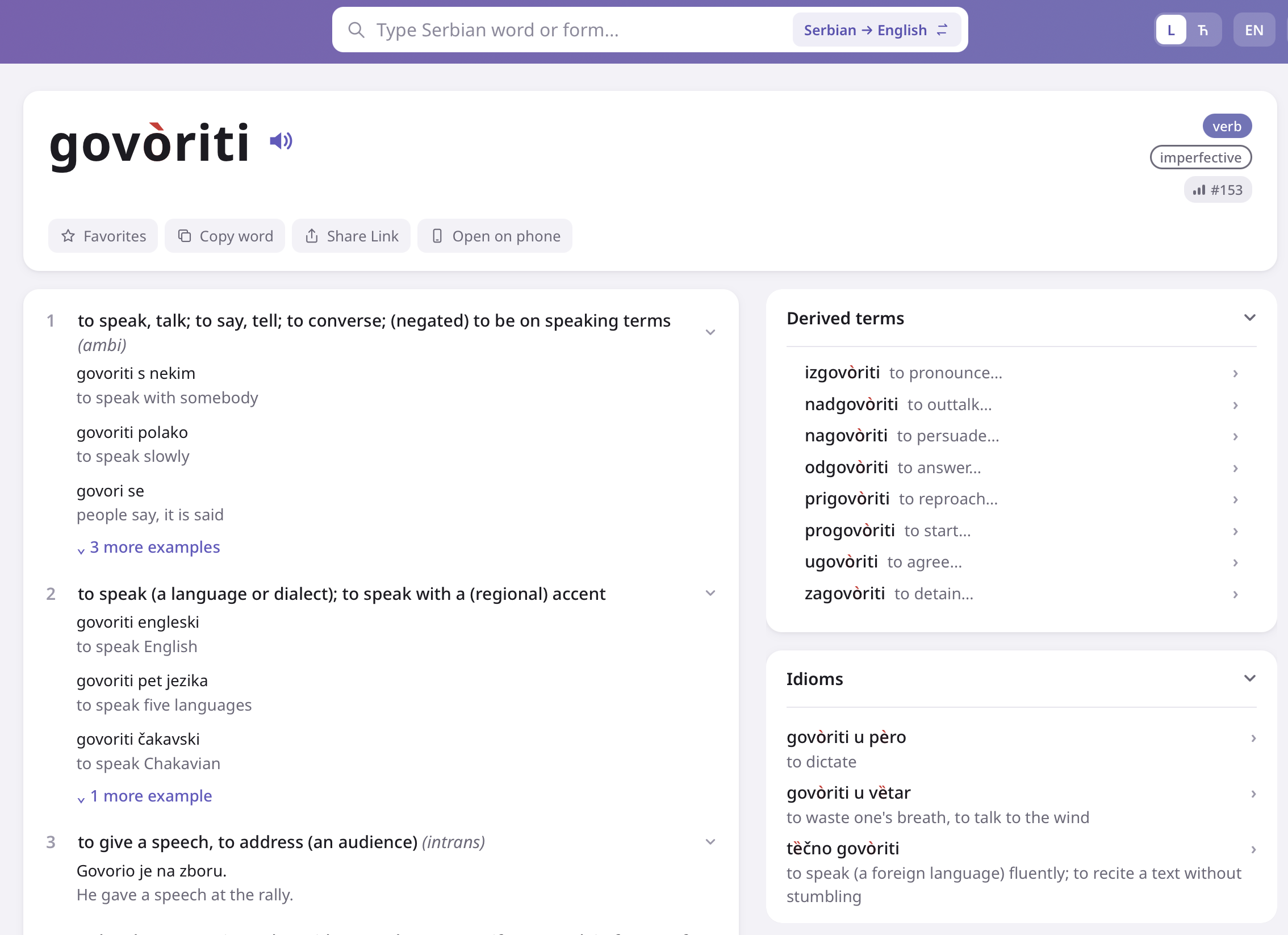
Recently I came across “obilježene obljetnice” in Croatian media and had to look it up. I would have immediately understood “godišnjice koje se slave.” This kind of thing has been happening a lot.
I’ve been coming across a lot of Serbian speaking content on social media, and I’ve realized that it’s much more similar to the way I, my parents, and Babas and Didos speak than a lot of the Croatian content I see (excluding Dalmatian content).
I have no interest in starting any political arguments, I’m just describing my experience as a heritage speaker.