r/astrophotography • u/OwlAstro • 9h ago
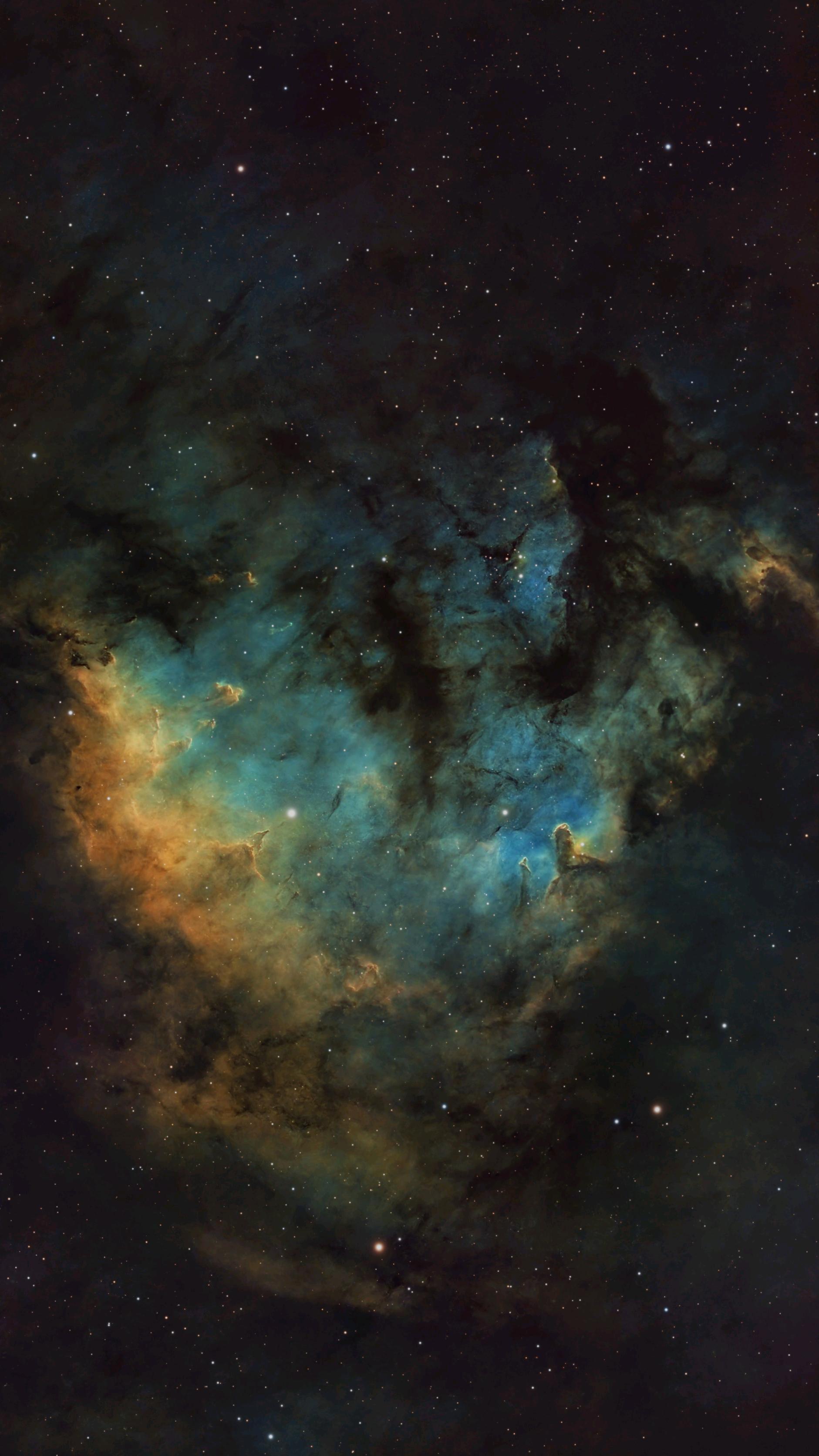
Nebulae M16, M17 and NGC6604 a three-panel Ha/OIII + RGB mosaic

This one was a challenge to process in the way I wanted with narrowband adding as much as possible while preserving the natural look from RGB
After 9 years I finally managed to get a result I'm happy with :)
For more crops and starless versions see the image on Astrobin
Target
This three panel mosaic spans from NGC6604 with its Sh2-54 surroundings to M17. The middle panel contains the famous M16 - Eagle nebula.
Between and around them the field is full of dark dust lanes and globules. The brown glow is the unresolved Sagittarius–Scutum star cloud behind it, which is why I added the RGB data back as a body layer.
This was my main project for my 3rd trip to Kiripotib Astrofarm. In total it contains over 40 hours of exposure between Ha, OIII and RGB.
Acquisition
This is a mosaic of 3 panels shot with a monochrome Nikon D600 side-by-side with a modified Nikon D600.
The mono D600 was used on an APM107/700 with Riccardi reducer and modified Nikon D600 on a TS Quadruplet 480/80, mounted on Fornax 51 and guided with MGEN.
Panel I - NGC6604
Ha 29x12min ISO400
OIII 13x12min ISO400
RGB 27x12min ISO400
Panel II - M16
Ha 24x12min ISO400
OIII 16x12min ISO400
RGB 23x12min ISO400
Panel III - M17
Ha 25x12min ISO400
OIII 16x12min ISO400
RGB 35x12min ISO400
Location: Astrofarm Kiripotib, Namibia
Processing (PixInsight)
- Calibration, stacking and registration. WBPP per panel and filter. The RGB panels were stacked with Local Normalization and PSF weights. RGB and OIII were registered onto the Ha grid of each panel with surface splines.
- Mosaic. PhotometricMosaic with M16 as reference, then NGC 6604, then M17. Applied to Ha, OIII and RGB separately One SPCC (Gaia DR3/SP) on the finished RGB mosaic, not per panel.
- Deconvolution and star removal. BXT on all three mosaics, then SXT to split stars and starless.
- Nebula layer. OIII was continuum-subtracted (OIII − 0.34·B). Ha was not continuum-subtracted, and I decided that after measuring it. In the star-cloud zones most of the “Ha” is actually star-cloud continuum, so subtracting it gained nothing. NXT on the narrowband was used, gated so it does not add noise in the empty sky. I combined Ha and OIII into an HOO palette with PixelMath.
- RGB body layer Starless RGB with a linked stretch, with its colour taken from the stars-included RGB. It is screened into the nebula at weight 0.45. Outside the emission regions (a smoothed Ha/OIII mask), the colour is taken from the RGB only. That keeps the gold-brown star clouds and the dust lanes, while the nebulae stay in HOO colour.
- Stars. RGB stars were stretched separately and screened back on. A per-channel black-point correction (about 0.06–0.07) was applied to the base before the stars went in.
For more crops and starless versions see the image on Astrobin