r/astrophotography • • 22h ago

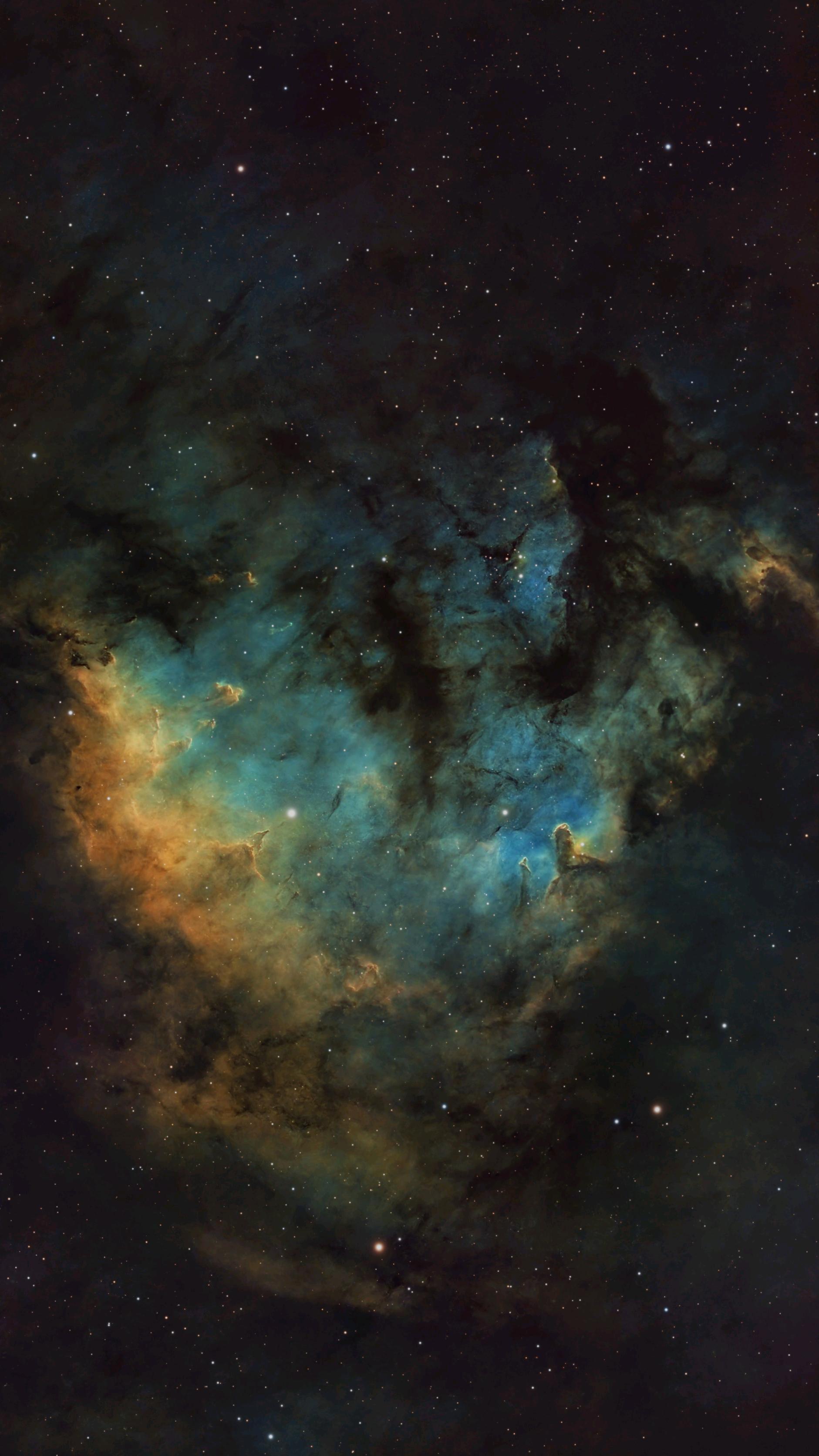
DSOs The Soul Nebula (IC 1848) in SHO

Post image
251 Upvotes

Target: IC 1848, the Soul Nebula

Location: Bortle 6, South Carolina

Gear:
Askar 103APO (700mm f/6.8)
ZWO ASI2600MM Pro
ZWO AM3N on iOptron LiteRoc tripod
ZWO ASIAir
Antlia 3nm Ha, OIII, SII and Antlia V-Pro RGB

Integration (about 22h 23m):
Ha: 44 × 500s (6h 07m)
OIII: 59 × 500s (8h 12m)
SII: 51 × 500s (7h 05m)
RGB (stars): 20 × 60s each
Calibration: darks, flats, bias


r/astrophotography • • 10h ago

Galaxies M31-The Andromeda Galaxy, in Ha, Oiii & LRGB

Post image
228 Upvotes

r/astrophotography • • 5h ago

DSOs Garlic nebula

Post image
222 Upvotes

I started this object last month and so far have 52 hours and it needs much much more.

Imaged using my skywatcher 200P setup, 533MMPro and starizona .75 reducer.

Also imaged using my SHO Altair 3nm filters and all of this resting on my AM5 mount.

It was processed in AstroStakr and Photoshop.


r/astrophotography • • 15h ago

DSOs M95 — Barred Spiral Galaxy

Post image
133 Upvotes

This is my first time processing this M95 data, captured from my backyard in Round Rock, Texas, on March 12–13, 2026.

M95 is a barred spiral galaxy about 33 million light-years away in Leo. Its central bar and tightly wound spiral arms give it that distinctive ringlike appearance.

The finished image combines 56 two-minute exposures—1 hour and 52 minutes—captured with my ASI2600MC Air and no added filter.

Processing included calibration and stacking in PixInsight, photometric color calibration, and separate treatment of the galaxy and stars. The final adjustments bring out the bar and surrounding ring while keeping the bright center controlled. A tighter crop gives M95 more presence in the frame.

Acquisition and processing details: ASI2600MC Air, 56 × 120 seconds, gain 200, offset 50, approximately −10°C, no added filter. Headers record an AM3 mount and 387 mm focal length; the telescope model is unconfirmed. Calibrated with a matching 28-frame 120-second dark master and a candidate flat; flat calibration is approximate because its bias pedestal was assumed. PixInsight VNG debayering, registration, PSF-weighted integration with Winsorized sigma rejection. Compared all 56 on-target frames with the sharpest 40 and retained 56. ABE background correction, plate solving and Gaia DR3 SPCC color calibration, mild BlurXTerminator, StarXTerminator, and masked NoiseXTerminator. Luminance-preserving stretch, separate star recombination, masked galaxy contrast and sharpening with core protection, and a native-resolution crop. No generative image processing.


r/astrophotography • • 13h ago

Nebulae SH2-171, Teddy Bear Nebula

Post image
92 Upvotes

Taken from my bortle 9 balcony in Paris, this was didn't have such a strong gradient as I normally get here, so I enjoyed the processing a lot! I'd like to revisit this object with my wider FOV rig next year, I think it looks pretty cool

Equipment and acquisition:

- Askar 71F + 0.75X reducer

- Asi585MC Air

- Teseek 17

- SvBony + asi120mm guide camera

- ZWO EAF, ZWO EFW

- L-Ultimate filter: 216 x 180 sec

- Antlia ALP-T SII-OIII 3nm: 233 x 180 sec

(approx. 22.5 hours in total)

- 30 darks, 30 flats per filter, 30 bias

Processing (PI)

WBPP 2x drizzle, SetiAstro AutoDBE, SPCC, blurX correct only, starX

On starless images: DBXtract, linear fit to Ha, then channel combination. Extract L component. SetiAstro statistical stretch (soft), then manual curves transformations with different color and range masks, selective color correction script, noiseX. For luminance, stretch and masked curves to bring up details, noiseX. LRGB combination, dark structure enhance script.

For stars: setiastro NB to RGB star stretch, pixelmath to recombine with starless


r/astrophotography • • 9h ago

Nebulae Orion Nebula & Running Man Nebula

Post image
54 Upvotes

The great Orion Nebula and Running Man Nebula! This majestic stellar nursery is about 1400 light-years away and is one of the brightest deep sky objects in the night sky!

A very nostalgic target for me. This was the first deep sky object I captured 10 months back when I was just getting started in this hobby. Visited this back again now that the orion constellation is back up again! 🙂

Telescope: Seestar S50
Data: 4.5 hours
Tools used: GraXpert, Siril, GIMP
Script mentions: DeepSNR, CosmicClarity Sharpen, VeraLux (Revela & Curves), HDR_multiscale
Bortle 8-9


r/astrophotography • • 21h ago

Melotte 15

Post image
45 Upvotes

The heart of the Heart.

Askar 71F
ASI533MC Pro
CGEMii
4.5hrs UHC
Bortle 8

Processed in beta testing of the new AstroStakr program and a slight touch in PS.


r/astrophotography • • 10h ago

Planetary Saturn

Enable HLS to view with audio, or disable this notification

32 Upvotes

Believe it or not, the image in the eyepiece was even better than the video!

12" DOB + Astral Fields EQ Platform

SVBony 705C + ADC + Barlow 2x

Firecapture + PiPP+ Autostakkert + Registax + Fast Stone Image Viewer


r/astrophotography • • 2h ago

Lunar Hunter's Moon

Post image
20 Upvotes

​

Hunter's Moon from Tennessee on 10-26-26

Equipment: Canon EOS 90D and Sigma 150-600mm Contemporary lens at 600mm

Exposure: 731 x 1/250 at f8 and ISO 100

Processing:

Centered/cropped in PIPP

Stacked in Autostakkert!

Sharpened in Registax

Final edit in Photoshop


r/astrophotography • • 5h ago

Lunar Luna, October 25th

Post image
20 Upvotes

It’s a $20 telescope this is my first time, saving up for a better one. Let me know if yalls favorites


r/astrophotography • • 1h ago

Nebulae Sh2-114, flying dragon nebula

Post image
• Upvotes

142 hours of exposure over the last 4 months.

Mount- ZWO AM3
Telescope- William Optics ZenithStar81
Guide Scope- ZWO OAG
Camera- ZWO ASI183mc Pro
Guide Camera- ZWO ASI120mm
Imaging Filter- Optolong L-Ultimate, SII, OIII
Other accessories- ZWO EAF, ZWO filter wheel, ZWO ASIair Plus, 6aiii reducer/field flattener


r/astrophotography • • 5h ago

Planetary Saturn

Post image
17 Upvotes

Finally got my Barlow x2 lens and this was my first time trying it.

Used 10 inch Sky-Watcher 254/1200 with s24 ultra 4K 120FPS with Barlow x2 and 6mm planetary eyepiece.

Processed with PIPP then Autostakkert! and then Astrosurface.

This was my second time trying planetary imaging so any advice will be welcomed.


r/astrophotography • • 12h ago

Nebulae North America nebula, untracked

Post image
16 Upvotes

A couple of months ago I posted a pic of the North America nebula and its surroundings. Today I tried some more editing and I'm very happy with how it turned out.

- Canon M50, 50mm F1.8 but shot at 2.8. 75*4 seconds. Bortle 4.5. No tracker

- Post-processing: AstroWizard (stack, denoise using GraXpert, stretch and star removal using StarNet), Seti Astro Suite (sharpen), Photoshop (curves, stars reduction, contrast, etc).


r/astrophotography • • 2h ago

DSOs NGC 6914 - The Eyes

Post image
14 Upvotes

r/astrophotography • • 12h ago

Nebulae Orion Belt along with Orion Nebula Captured with Smartphone

Post image
8 Upvotes

Device= Realme 15 Pro, ISO = 1000, Shutter speed = 15sec, White Balance = 4200-4500K, Max Focus, Number of Exposures = 70


r/astrophotography • • 7h ago

Lunar Moon

Post image
4 Upvotes

Starseeker IV 150/750

Touptek Ae676c

Bortle 4.8

Exposure ~1ms, ~1000 Pictures

Positional correction and Stacking with Python (astroaligne)

Fine Tuning with Therawpee and Photocraft


r/astrophotography • • 8h ago

Comet Lulin

Post image
3 Upvotes

This image was taken on February 23rd, 2009 with a Nikon D300 and Sigma 150-600mm lens at 150mm. Exposure was 8 seconds, f/5, ISO 6400. Processed in Affinity and On1 NoNoise.


r/astrophotography • • 11h ago

DSOs IC 1318 and Sadr

Post image
5 Upvotes

I found this session while going through my stored astrophotography data. I captured it from my Round Rock backyard on October 31–November 1, 2025, but had never processed it. This is its first finished image.

The bright star near the center is Sadr, also known as Gamma Cygni—a supergiant marking the center of the Northern Cross in Cygnus. It appears surrounded by the clouds of IC 1318, but that’s a line-of-sight effect: Sadr is roughly 1,800 light-years away, while the nebula lies much farther behind it, around 4,900 light-years away.

The red nebulosity is glowing hydrogen gas. The dark lanes cutting through it are clouds of dust blocking light from behind. This field captures part of the extensive gas-and-dust complex around Sadr.

The finished image combines 40 five-minute exposures—3 hours and 20 minutes—with my ASI585MC Air. Processing brought out the faint nebulosity and dust structure while controlling the stars and the glow around Sadr. A session sitting on a drive finally became an image.

Acquisition: ASI585MC Air, 40 × 300 seconds retained from 47 frames; gain 107, offset 15, recorded sensor temperatures −19.1 to −16.3°C. The headers record an AM3 mount and approximately 384 mm focal length; the telescope model is unconfirmed. Filter information was not recorded, and I no longer remember which filter was used.

Processing: bias and 100 same-night flats, conservative hot-pixel correction, registration and weighted integration in PixInsight. Compared 29-frame and 40-frame stacks and selected 40 for lower noise. Empirical field-star color balance, conservative BlurXTerminator, StarXTerminator separation, masked NoiseXTerminator, then scripted stretches, local contrast, selective color and localized halo control. Stars were blended back separately. No synthetic nebulosity was added.


r/astrophotography • • 23h ago

Lunar Cool moon halo I caught with my phone

Thumbnail
imgur.com
4 Upvotes

r/astrophotography • • 9h ago

Lunar The Moon captured with a 700/60mm refractor (Nov 8 2025)

Post image
1 Upvotes

This was my first ever photo taken of the moon almost a year a go with my very first telescope.

Telescope: Bresser Refractor Telescope 700/60mm
Eyepiece: 20 mm
Camera: Samsung Galaxy A36
Processing: Minor contrast and brightness adjustments on phone.