r/astrophotography • u/TowerLineTrail • 2h ago
Galaxies M31-The Andromeda Galaxy, in Ha, Oiii & LRGB

64
Upvotes
r/astrophotography • u/junktrunk909 • Aug 12 '24
Recently, a few of us became new moderators and since then we have been trying to get organized primarily to update the rules to reflect what we believe are in the best interest of this sub. This has largely meant reverting to the structure prior to the protest while also adapting to current technology and tastes. While we supported the protest goals at the time, and agree with the mod decision to include this sub in that protest, we also recognize that it's time to move on and restore some process to the sub for its continuing members. We're excited to announce that these new rules are now live in the sub and in detail at our revised wiki. The changes from prior to the protest largely amount to:
We recognize not everyone will like these changes and that there are other subs that focus primarily on some of these types of images, but we feel that an "astrophotography" sub should include everyone. We are going to monitor how well this goes, so please try to be open-minded to help support these contributions from some members of the community. After some time with these changes we plan to poll you to see how they are going and what other improvements you'd like to see. In the meantime, with these rules back in place, expect to see heavier moderation if posts lack complete acquisition/processing details or otherwise violate these rules.
Lastly, we also want to thank everyone for their patience while we get organized to bring these changes to you and for the incredible work all mods on this sub have done over the years and continue to do (many from prior to the protest are still here and active, so show some love!).
Clear Skies!
r/astrophotography • u/TowerLineTrail • 2h ago
r/astrophotography • u/paulydavis • 7h ago
This is my first time processing this M95 data, captured from my backyard in Round Rock, Texas, on March 12–13, 2026.
M95 is a barred spiral galaxy about 33 million light-years away in Leo. Its central bar and tightly wound spiral arms give it that distinctive ringlike appearance.
The finished image combines 56 two-minute exposures—1 hour and 52 minutes—captured with my ASI2600MC Air and no added filter.
Processing included calibration and stacking in PixInsight, photometric color calibration, and separate treatment of the galaxy and stars. The final adjustments bring out the bar and surrounding ring while keeping the bright center controlled. A tighter crop gives M95 more presence in the frame.
Acquisition and processing details: ASI2600MC Air, 56 × 120 seconds, gain 200, offset 50, approximately −10°C, no added filter. Headers record an AM3 mount and 387 mm focal length; the telescope model is unconfirmed. Calibrated with a matching 28-frame 120-second dark master and a candidate flat; flat calibration is approximate because its bias pedestal was assumed. PixInsight VNG debayering, registration, PSF-weighted integration with Winsorized sigma rejection. Compared all 56 on-target frames with the sharpest 40 and retained 56. ABE background correction, plate solving and Gaia DR3 SPCC color calibration, mild BlurXTerminator, StarXTerminator, and masked NoiseXTerminator. Luminance-preserving stretch, separate star recombination, masked galaxy contrast and sharpening with core protection, and a native-resolution crop. No generative image processing.
r/astrophotography • u/Techno-Scientist • 5h ago
Taken from my bortle 9 balcony in Paris, this was didn't have such a strong gradient as I normally get here, so I enjoyed the processing a lot! I'd like to revisit this object with my wider FOV rig next year, I think it looks pretty cool
Equipment and acquisition:
- Askar 71F + 0.75X reducer
- Asi585MC Air
- Teseek 17
- SvBony + asi120mm guide camera
- ZWO EAF, ZWO EFW
- L-Ultimate filter: 216 x 180 sec
- Antlia ALP-T SII-OIII 3nm: 233 x 180 sec
(approx. 22.5 hours in total)
- 30 darks, 30 flats per filter, 30 bias
Processing (PI)
WBPP 2x drizzle, SetiAstro AutoDBE, SPCC, blurX correct only, starX
On starless images: DBXtract, linear fit to Ha, then channel combination. Extract L component. SetiAstro statistical stretch (soft), then manual curves transformations with different color and range masks, selective color correction script, noiseX. For luminance, stretch and masked curves to bring up details, noiseX. LRGB combination, dark structure enhance script.
For stars: setiastro NB to RGB star stretch, pixelmath to recombine with starless
r/astrophotography • u/Substantial_Put2322 • 14h ago
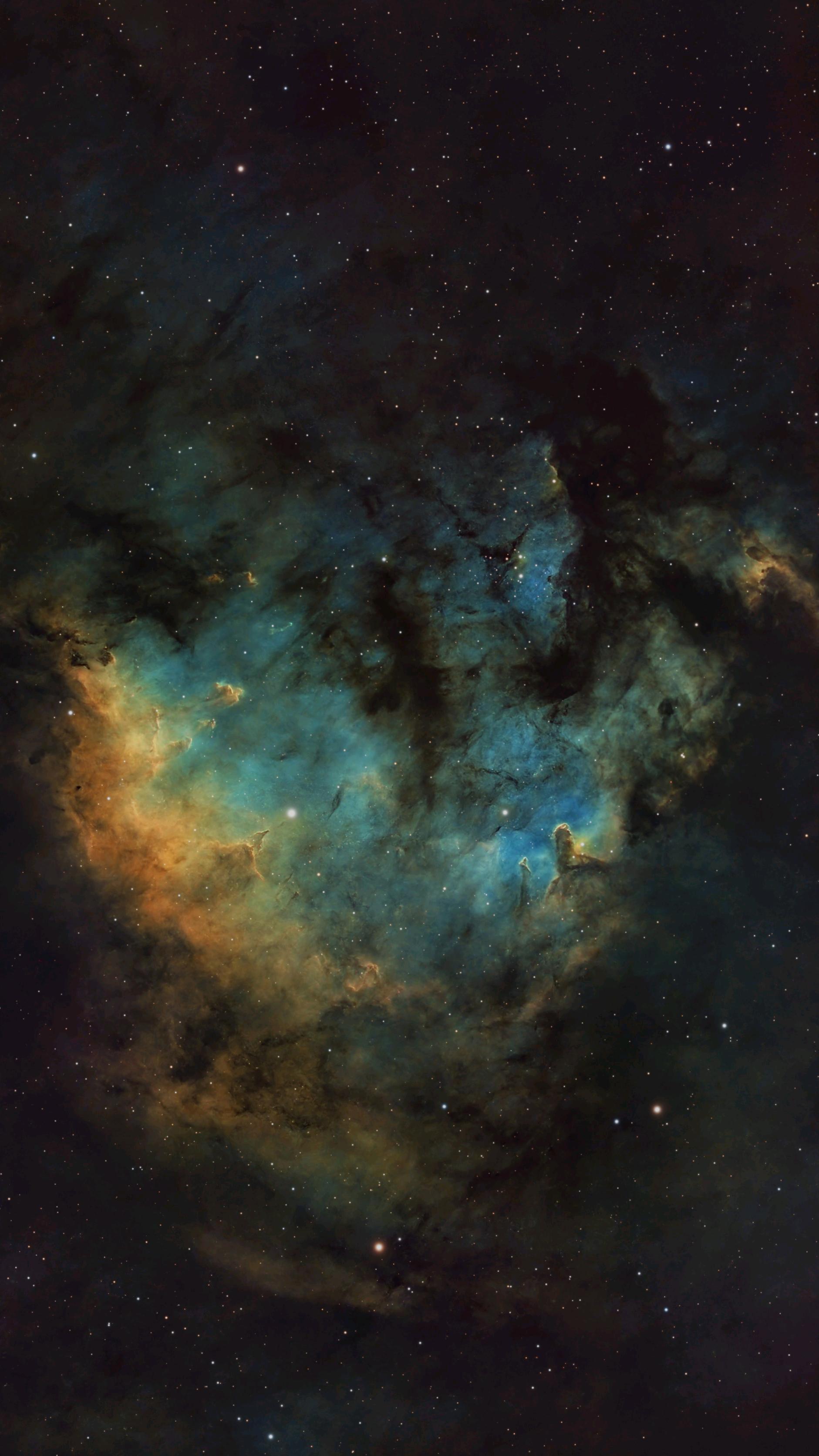
Target: IC 1848, the Soul Nebula
Location: Bortle 6, South Carolina
Gear:
Askar 103APO (700mm f/6.8)
ZWO ASI2600MM Pro
ZWO AM3N on iOptron LiteRoc tripod
ZWO ASIAir
Antlia 3nm Ha, OIII, SII and Antlia V-Pro RGB
Integration (about 22h 23m):
Ha: 44 × 500s (6h 07m)
OIII: 59 × 500s (8h 12m)
SII: 51 × 500s (7h 05m)
RGB (stars): 20 × 60s each
Calibration: darks, flats, bias
r/astrophotography • u/Kyouma118 • 1h ago
The great Orion Nebula and Running Man Nebula! This majestic stellar nursery is about 1400 light-years away and is one of the brightest deep sky objects in the night sky!
A very nostalgic target for me. This was the first deep sky object I captured 10 months back when I was just getting started in this hobby. Visited this back again now that the orion constellation is back up again! 🙂
Telescope: Seestar S50
Data: 4.5 hours
Tools used: GraXpert, Siril, GIMP
Script mentions: DeepSNR, CosmicClarity Sharpen, VeraLux (Revela & Curves), HDR_multiscale
Bortle 8-9
r/astrophotography • u/BestRetroGames • 2h ago
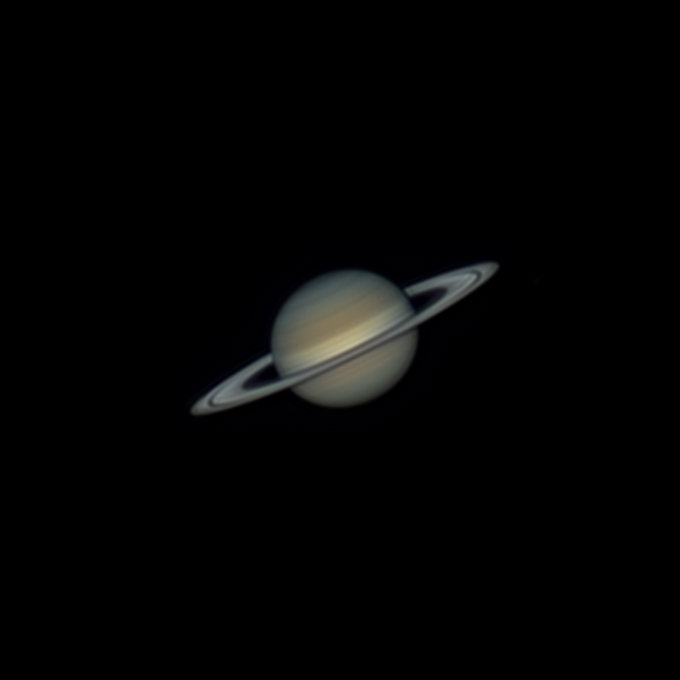
Enable HLS to view with audio, or disable this notification
Believe it or not, the image in the eyepiece was even better than the video!
12" DOB + Astral Fields EQ Platform
SVBony 705C + ADC + Barlow 2x
Firecapture + PiPP+ Autostakkert + Registax + Fast Stone Image Viewer
r/astrophotography • u/imaudeon • 4h ago
A couple of months ago I posted a pic of the North America nebula and its surroundings. Today I tried some more editing and I'm very happy with how it turned out.
- Canon M50, 50mm F1.8 but shot at 2.8. 75*4 seconds. Bortle 4.5. No tracker
- Post-processing: AstroWizard (stack, denoise using GraXpert, stretch and star removal using StarNet), Seti Astro Suite (sharpen), Photoshop (curves, stars reduction, contrast, etc).
r/astrophotography • u/Entire-Ad-4201 • 13h ago
The heart of the Heart.
Askar 71F
ASI533MC Pro
CGEMii
4.5hrs UHC
Bortle 8
Processed in beta testing of the new AstroStakr program and a slight touch in PS.
r/astrophotography • u/Lead_weight • 18h ago
Captured and processed entirely on a Mac.
Equipment
Capture (Laminar)
Processing (Strata)
r/astrophotography • u/AlgaeDizzy2479 • 32m ago
This image was taken on February 23rd, 2009 with a Nikon D300 and Sigma 150-600mm lens at 150mm. Exposure was 8 seconds, f/5, ISO 6400. Processed in Affinity and On1 NoNoise.
r/astrophotography • u/PopularWrangler0 • 1d ago
By far the faintest deep space target I have ever captured.
Telescope: Askar 103APO
Camera: ZWO ASI6200MC Pro camera
Tracking Mount: ZWO AM5N
Total integration: 30 hours
Filters: 20 hours of 300" subs (Antlia Triband RGB) +10 hourt of 240" subs (UV/IR Cut)
Processed in Pixinsight and Photoshop
Full details: https://www.instagram.com/kasrak_film/
r/astrophotography • u/Tis_But_A_Fake_Name • 18h ago
Dates: October 18-23, 2026 (6 nights) Integration: 935 x 120 s (31.2 hours), plus 171 x 15 s (43 minutes) to keep the bright star cores from saturating Total: about 31.9 hours Final image: 5988 x 3916 pixels (about 2.2 x 1.4 degrees)
EQUIPMENT AND SETTINGS Telescope: Askar FF80 (80 mm, 597 mm focal length, f/7.5) Camera: ZWO ASI2600MC Air (one-shot color), gain 100, offset 50, cooled to -10 C Image scale: 1.3 arcseconds per pixel Capture and guiding: ASIAIR Calibration: darks, flats and bias frames
PROCESSING Siril 1.4.4: calibration, registration, stacking, HDR blend of the 120 s and 15 s data, background extraction, star-catalog color calibration (SPCC, Gaia DR3), stretching and noise reduction StarNet v2: stars and nebula processed separately, then recombined
r/astrophotography • u/Tis_But_A_Fake_Name • 18h ago
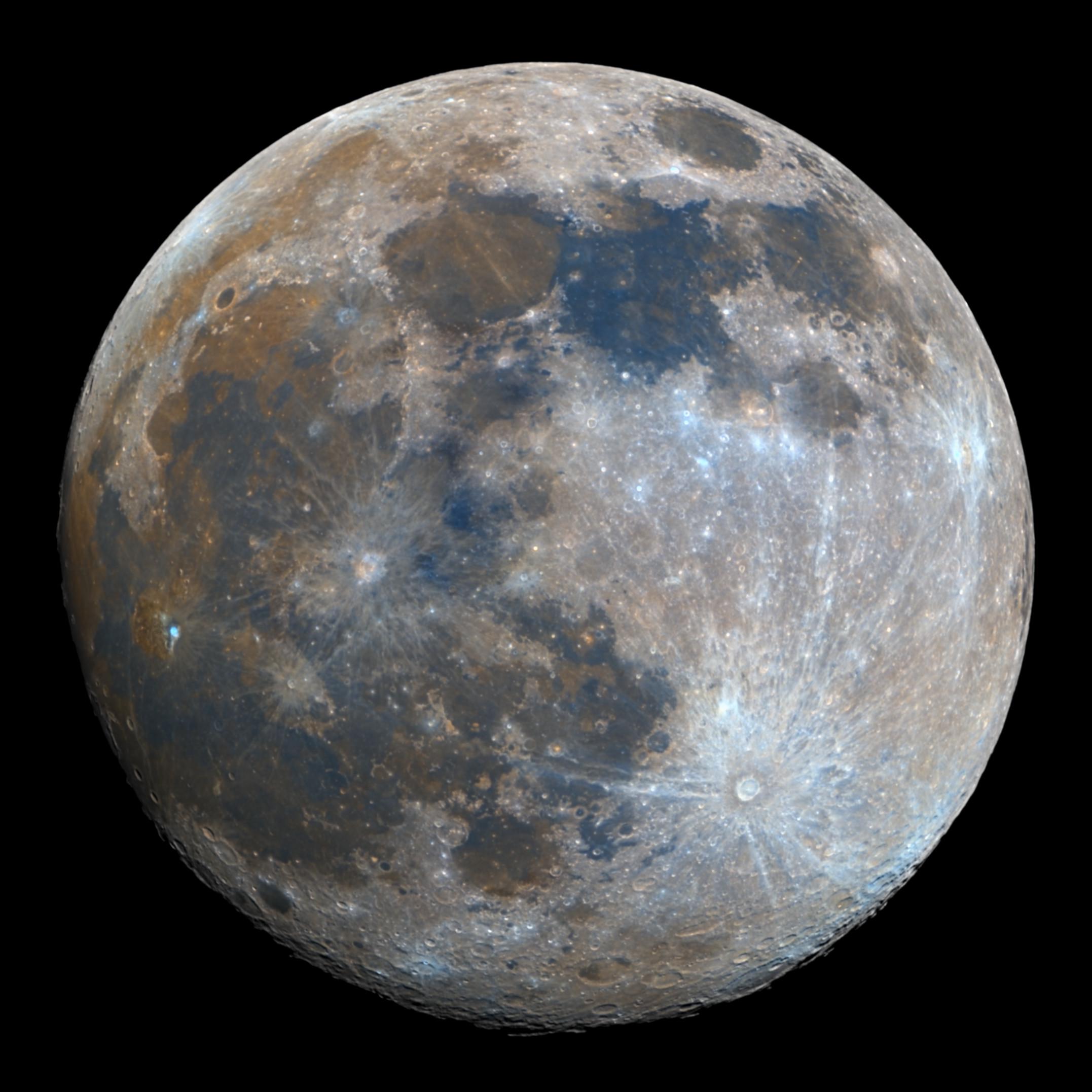
Moon altitude: 35 to 39 degrees
Location: Michigan, USA (Bortle 5)
Equipment
Telescope: Askar FF80 (80 mm, 597 mm, f/7.5), native focal length
Camera: ZWO ASI585MC
Image scale: 1.0"/px
Capture software: SharpCap 4.1
Acquisition
Mode: lucky imaging, SER video, RAW8, 2200x2160 ROI
Gain 99, exposure 1.75 ms, ~47 fps
Captured: 6,000 frames (3 videos x 2,000)
Stacked: best 1,800 frames (30%)
Calibration: 50 darks, 50 flats, 50 dark flats
Processing
Siril 1.4 plus custom Python (NumPy/OpenCV)
- Frame quality scoring and selection
- Sub-pixel alignment and stacking
- r/B realignment for atmospheric dispersion (0.7 px)
- Blue halo matching to suppress false color around bright features
- Multi-scale wavelet sharpening (luminance)
- Color separated from luminance, denoised, then saturation boosted ~22x
r/astrophotography • u/Natsu_Hime • 1d ago
The sprawling structure of the Tarantula Nebula (30 Doradus) in the Large Magellanic Cloud captured in faux-SHO palette.
Acquired using a Seestar S50 and TH10 fluid head in equatorial mode, combining duoband and broadband data in Bortle 8 city light pollution. 2700x10s of broadband and 4000x10s of duoband for a total of 18.5 hours.
Processed in Siril with RCAstro tools and Photoshop for combining the broadband and duoband masters. Graxpert -> BlurXTerminator, NoiseXTerminator, StarXTerminator -> Separate GHS on the stars and starless for each broadband and duoband master -> False SHO pixel math -> Combined both in photoshop with duoband starless layer with broadband detail, and broadband stars.
r/astrophotography • u/NqNewlin • 16h ago
Equipment:
* Camera: ZWO ASI2600MC Pro
* Scope: SkyWatcher EvoStar 80ED
* Mount: SkyWatcher HEQ5
* Guide Scope: SkyWatcher 8x50 Finderscope
* Guide Camera: ZWO ASI120MM
* Filters: SVBony SV220 HaOiii & SiiOiii
* Focuser: Gemini EAF
Acquisition:
* Gain 100
* 224 x 300" lights HaOiii
* 494 x 300" lights SiiOiii
* 20 Flats each session
* 20 Darks
* 20 Bias
* Total Integration time - 59hr 50m
Processing:
* Stack in Siril
* Process in Pixinsight
* Background extraction
* BlurXterminator
* Split channels DBExtract
* Linear Fit
* Combine Channels in SHO palette
* MultiScale Adaptive Stretch
* StarXterminator
* NarrowBand Normalization
* Curves Adjustments
* NoiseXterminator
* SetiAstro NB to RGB Stars script
* Recombine stars
Astrobin Link: https://app.astrobin.com/u/nqnewlin?i=eaof23
r/astrophotography • u/ConsiderationSame222 • 21h ago
(845 frames x 60sec) S50 Pro (Bortle 8-9 skies)
Registered and stacked: Stacking Wizard
Processed: Astrowizard with RC Astro plug ins - Star Xterminator, Blur Xterminator and Noise Xterminator
Post processing: Photoshop
Colors and curves in Photoshop were just personal preference.
r/astrophotography • u/GaryCPhoto • 1d ago
Not every plan goes to plan. Sometimes technology goes haywire and I wake up to find my telescope pointing at the ground with wires snagged. Sometimes the meridian flip doesn’t work and I gather no data. Focuser doesn’t work, guiding flies off the handle. So many variables. In this instance it didn’t centre on the target. This was my second imaging session of the night. Still gathered something worth processing. 2.5hrs on the Rosette Nebula from my rooftop in Toronto under bortle 8 skies. Next time will hopefully be better. Still happy with the results though. Clear skies everyone.
30x300s lights
Calibration frames
Gain 100
Cooled to -5
Gear: Svbony 122mm apo, zwo 2600mc pro, ragdoll 17 pro, Optolong L-Ultimate, zwo guide cam & scope, zwo Asiair, zwo eaf.
Stacked in Astro Pixel Processor. Processed in Pixinsight. DBE, D Crop, blur x, noise x, stat stretch, star x, narrowband norm, range mask, curves transformation. Further editing in photoshop.
r/astrophotography • u/LuukyLuuk_ • 1h ago
This was my first ever photo taken of the moon almost a year a go with my very first telescope.
Telescope: Bresser Refractor Telescope 700/60mm
Eyepiece: 20 mm
Camera: Samsung Galaxy A36
Processing: Minor contrast and brightness adjustments on phone.
r/astrophotography • u/NoaMichael • 1d ago
🧙 The Wizard Nebula (NGC 7380) - an open cluster and emission nebula in constellation Cepheus. Since the moon is very close to being full, I've been focusing on capturing only emission nebula in narrowband to block out the moonlight which would otherwise drown out the signal. Even with the moon to fight against, this stretch of clear nights in New Jersey has been insane. My telescope has officially been sitting outside for a week straight, and there are at least 3 more cloudless nights left. Maybe I'll get one more project finished before it ends?
Acquisition Details:
Gear:
Editing
r/astrophotography • u/paulydavis • 17h ago
Another look at the Monkey Head Nebula, NGC 2174. I’ve posted this target before, but this version revisits the original exposures with updated processing to bring out the dark lanes and give the nebula more separation from the surrounding stars.
I captured this from my backyard in Round Rock on November 8, 2025, using my ZWO ASI585MC Air. The finished image combines 45 five-minute exposures—3 hours and 45 minutes of total integration.
For this reprocessing, I compared several stacks and kept all 45 exposures. I worked on the nebula and stars separately, refined the background, and applied restrained sharpening to make the smaller structures easier to see. A slightly wider crop gives the faint outer cloud more room.
Acquisition and processing details: ASI585MC Air, gain 107, offset 15, 45 × 300 seconds. The headers identify a ZWO AM3 mount and 383 mm focal length; I have not confirmed the telescope model. The filter was not recorded and I do not remember which was fitted. Recorded sensor temperature was approximately −15.2 to −16.5°C.
Bias calibration and 99 same-night flats, targeted bad-pixel correction, PixInsight VNG debayering and registration, PSF-weighted integration with Winsorized sigma rejection. Compared 36-, 42-, and 45-frame stacks and retained all 45. Background modeling and empirical field-star color balance, mild BlurXTerminator, StarXTerminator, NoiseXTerminator, followed by masked luminance contrast/sharpening, a small ridge lift, and reduced star brightness. Final RGB presentation; no generative image processing.
r/astrophotography • u/Tall-Beautiful-6186 • 1d ago
Last night the thunderstorms finally scattered and we had extremely clear skies after a lot of rain! Despite the almost full moon, I managed to grab about 5 hours on one of my favorite galaxy pairs, M81 and M82.
This image is a total 4.75 hours of integration time with my usual rig and the L-Pro filter. Hope you enjoy it!
• C8

• 4.75 hours integration w/ 2-min subs

• ASIAIR & ASI533MC

• EQ6-R Pro

• Hyperstar F/2

• L-Pro 2" filter

• Bortle 8/9
r/astrophotography • u/lumoraastro • 21h ago
Captured tonight, 25 October 2026, Leeds, West Yorkshire, UK.
Equipment: DWARF 3 smart telescope with EQ wedge fitted.
Settings:
Solar System Moon mode
Automatic focus and lunar tracking
Gain 20
999-frame stack
No post-processing — straight from the telescope
Very windy conditions tonight, so I managed three captures before packing everything away. Really pleased with the detail of my dwarf 3.